Canada Elevator Regulators and Mechanic Licensing 2026
By Nutan Mandal, ElevatorPlus · Compliance reviewed by Mr. Sumeet Katariya
In short: Canada has one elevator code and five different bodies enforcing it. This is written for contractors who work across provincial lines and keep discovering the rules are not the same. It covers what each regulator actually is in law, who can and cannot certify a mechanic, and the Red Seal question that comes up in almost every hiring conversation.
Key takeaways
- There is no Red Seal for elevator mechanics. Not in any province. The Red Seal trades list has no entry between Drywall Finisher and Floorcovering Installer, and the Ellis Chart files the trade under non-Red-Seal with "Red Seal Endorsement Offered: No" for every jurisdiction that has it.
- Ontario's Elevating Devices Mechanic is a non-compulsory trade, which surprises people. What you actually need is a TSSA certificate under O. Reg. 222/01. Skilled Trades Ontario issues no Certificate of Qualification for this trade at all.
- Alberta is the opposite. Elevator Constructor is a designated and compulsory certification trade. And AEDARSA, which inspects the devices, does not certify the people. That sits with Apprenticeship and Industry Training.
- In British Columbia you cannot even enter a hoistway without certification, a supervised mechanic-in-training status, or emergency personnel standing. Section 3.4 of the regulation goes further than most contractors expect.
- TSSA is not a government department. It is a not-for-profit corporation, arm's length from government, expressly not a Crown agency, with authority to impose monetary penalties in the elevating devices sector.
What this guide covers: what each regulator is in law · Ontario, BC and Alberta licensing compared · the Red Seal question · Quebec and Saskatchewan · what actually goes wrong across provincial lines · FAQs.
The five bodies, and what they actually are
They are not five versions of the same thing. Their legal footing differs, and that changes what they can do to you.
Ontario — TSSA. The Technical Standards and Safety Authority is a not-for-profit corporation established by the province to administer the Technical Standards and Safety Act, 2000. In its own words it "is arm's length from government and is not a Crown agency." It regulates six sectors including elevating devices, and its powers run to inspector's orders, director's orders, prosecution in provincial offences courts, suspension or revocation of authorisations, and monetary penalties in the elevating devices sector specifically.
British Columbia — Technical Safety BC. Operating under the Safety Standards Act and the Elevating Devices Safety Regulation, B.C. Reg. 101/2004. One caution worth knowing: the regulation text itself still refers in places to the "British Columbia Safety Authority." Technical Safety BC is how the regulator styles itself and how the Act is administered, so use that, but do not assert it is the corporate legal name.
Alberta — AEDARSA. The Alberta Elevating Devices and Amusement Rides Safety Association is a delegated administrative organization, operating under an Administration Agreement with the Government of Alberta made under Schedule 10 of the Government Organization Act, within the Safety Codes Act. It conducts in-service inspections and is approved by the Minister of Municipal Affairs to issue Permits of Operation.
Quebec — RBQ. The Régie du bâtiment du Québec works from the Building Act (CQLR c. B-1.1) through two separate chapters: Chapter IV of the Construction Code for construction work, and Chapter IV of the Safety Code for use, maintenance and upkeep. Amending regulations came into force on 13 July 2024 with a twelve-month transition that ended 13 July 2025.
Saskatchewan — TSASK. The Technical Safety Authority of Saskatchewan, constituted under its own Act, enforces the Passenger and Freight Elevator Act. Its inspectors are certified by NAESA International. Note one recent change: an Elevator Quality Management System is now required to obtain or renew a Class A, B or C contractor licence.
Licensing the people, province by province
This is where a national hiring policy quietly breaks.
| Province | What the mechanic needs | Who issues it | Compulsory? |
|---|---|---|---|
| Ontario | TSSA certificate, EDM-A through EDM-T under O. Reg. 222/01 | TSSA | Trade is non-compulsory, but the TSSA certificate is mandatory to work |
| British Columbia | Certificate of Qualification, classes A, C, H, MR, or IT | Technical Safety BC | Yes, and it also gates hoistway access |
| Alberta | Trade Certificate in Elevator Constructor | Apprenticeship and Industry Training, not AEDARSA | Yes, compulsory certification |
Ontario, and the trap in the wording
O. Reg. 222/01 s. 4(1) is unambiguous: "No person shall work on an elevating device as a mechanic without first having obtained a certificate from the director." Nine classes exist, from elevating device mechanic Class A down to mechanic-in-training Class T.
But Skilled Trades Ontario says something that reads like a contradiction and is not: "As there is no certifying exam in this trade, Skilled Trades Ontario does not issue a Certificate of Qualification," and "as this trade is non-compulsory, the information of individuals practicing this trade will not appear on the Skilled Trades Ontario Public Register."
Both are true at once. The trade is named under the Building Opportunities in the Skilled Trades Act, 2021 and is non-compulsory in that framework, while the Technical Standards and Safety Act separately makes it unlawful to touch an elevating device without a TSSA certificate. Skilled Trades Ontario spells the relationship out: a Certificate of Qualification from them "does not authorize its holder to engage in the practice of the trade unless the individual also holds an EDM-A certificate from the Technical Standards and Safety Authority."
The apprenticeship runs 8,000 hours, roughly four years, of which 720 are in school. The EDM-T must be held before any experience counts, which catches out companies who hire first and register later. Renewal takes twelve hours of continuing education every two years.
British Columbia, and the hoistway rule
B.C. Reg. 101/2004 s. 3.2(2) requires certification plus employment by a licensed elevating device contractor before any regulated work. Section 3.4 goes further than most contractors expect: you may not access a hoistway or the top of a car at all unless you are certified, a supervised mechanic-in-training, or emergency personnel.
Certificates are valid three years and renewal requires 24 hours of continuing education. The exam is open book, four hours, 70% to pass, with a maximum of three attempts.
One thing to get right in job adverts: do not route BC candidates through SkilledTradesBC. Its own trade-programs matrix lists Elevator Mechanic under deactivated programs, deactivated 30 November 2013. The route is Technical Safety BC's Mechanic-in-Training Program.
Alberta, and the split that catches people
Alberta separates device safety from trade certification completely. AEDARSA states it plainly in its own January 2026 bulletin: "AEDARSA does not certify Elevator Constructors. This is under the authority of Alberta Apprenticeship and Industry Training."
Elevator Constructor is a designated trade with compulsory certification under the Skilled Trades and Apprenticeship Education Act. Four periods of 1,800 hours each. Apprenticeship training through the Canadian Elevator Industry Educational Program is the only recognised route. The Trades Qualifier path requires 72 months and 10,800 hours plus a theory exam.
The penalties are worth knowing before you send an uncertified person to a job. Safety Codes Act s. 68(1) runs to $100,000 and six months for a first offence, and $500,000 and twelve months for subsequent offences.
👉 Tracking certification expiry across provinces on a spreadsheet?
Our free service checklist and report templates are a reasonable place to start structuring it.
The Red Seal question
It comes up in almost every hiring conversation, and the answer is short. There is no Red Seal endorsement for elevator mechanics anywhere in Canada.
The Red Seal trades list on red-seal.ca has no "E" section at all. It runs from Drywall Finisher and Plasterer straight to Floorcovering Installer. No Elevator Constructor, no Elevating Devices Mechanic, no Elevator Technician.
The Ellis Chart, maintained by the Canadian Council of Directors of Apprenticeship, files "Elevator Constructor and Mechanic" under its non-Red-Seal directory, showing "Red Seal Endorsement Offered: No" for every jurisdiction that recognises the trade. Provincial names differ: Elevating Devices Mechanic in Ontario, Elevator Constructor in Alberta, Elevator Service Technician in Nunavut, and Mécanicien de plate-formes élévatrices in Quebec.
One caution. At least one commercial exam-prep vendor markets an "Elevator Technician Red Seal study guide." It contradicts both red-seal.ca and the Ellis Chart. Do not build a training budget around it.
The practical consequence: a mechanic moving province to province does not carry a portable credential. Each move means a new certification process with that province's regulator, on that province's timetable.
What actually goes wrong across provincial lines
The failures we see are rarely dramatic. A mechanic certified in Ontario is dispatched to a British Columbia site and cannot lawfully enter the hoistway. A national HR policy tracks Red Seal status that does not exist for this trade. A BC certificate lapses at three years while the company's renewal reminder was built around Ontario's two-year continuing education cycle.
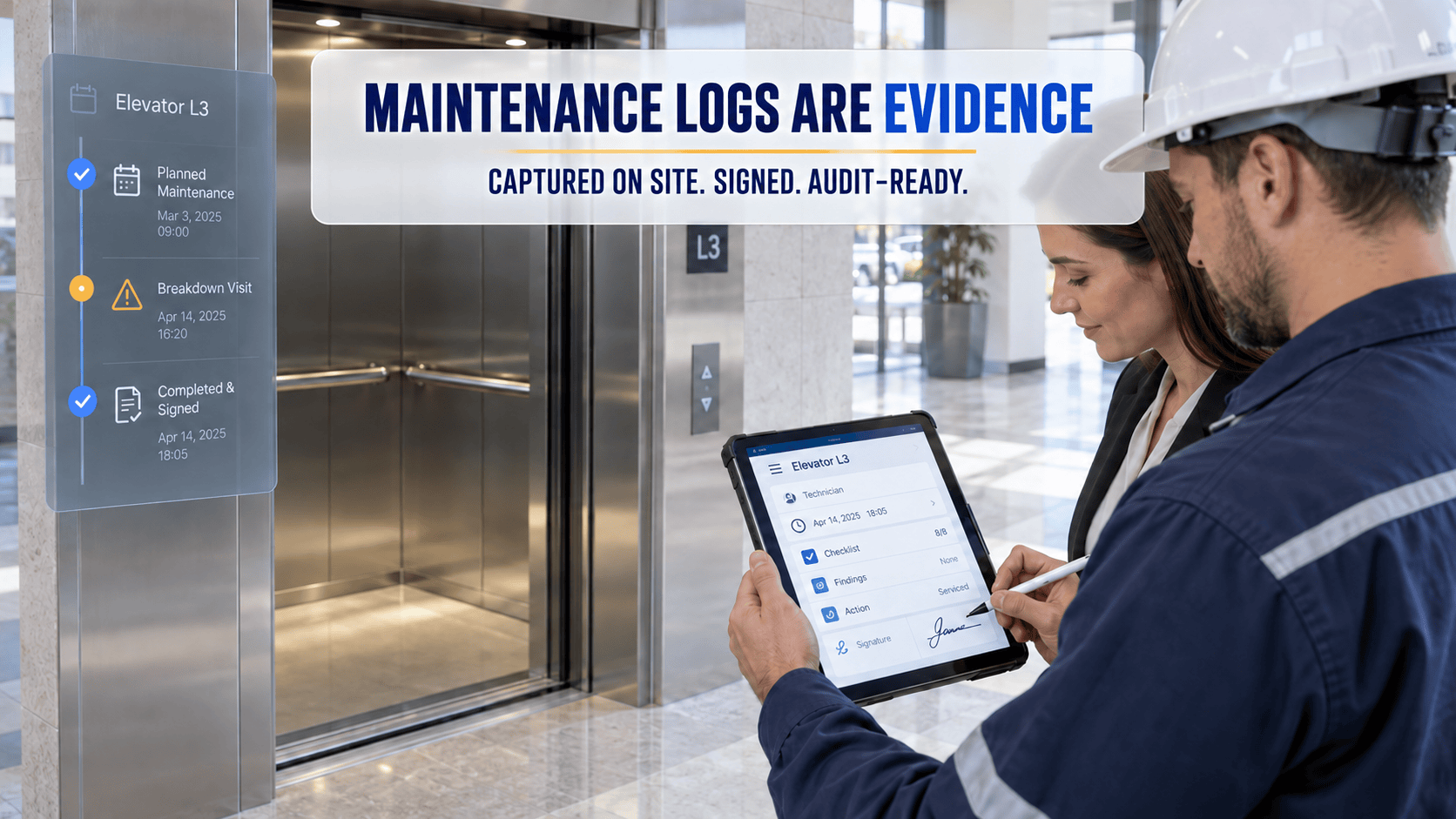
And the quiet one: Ontario requires the mechanic's printed name, signature and certification number on each maintenance task record. If certification lapsed halfway through the year, every record signed after that date is a problem discovered during an audit rather than before.
Frequently asked questions
Is there a Red Seal for elevator mechanics in Canada?
No. The Red Seal trades list contains no elevator trade, and the Ellis Chart records "Red Seal Endorsement Offered: No" for every jurisdiction. Certification is provincial and does not transfer automatically.
Is Elevating Devices Mechanic a compulsory trade in Ontario?
No, it is non-compulsory under the Building Opportunities in the Skilled Trades Act, 2021. However you cannot lawfully work on an elevating device without a TSSA certificate under O. Reg. 222/01, so the practical effect is close to compulsory.
Who issues elevator mechanic certificates in Ontario?
TSSA, under O. Reg. 222/01. Skilled Trades Ontario does not issue a Certificate of Qualification for this trade.
Does AEDARSA certify elevator mechanics in Alberta?
No. AEDARSA inspects devices and issues Permits of Operation. Trade certification sits with Alberta Apprenticeship and Industry Training under the Skilled Trades and Apprenticeship Education Act.
Can an uncertified person enter a hoistway in British Columbia?
No. Section 3.4 of B.C. Reg. 101/2004 restricts hoistway and car-top access to certified mechanics, supervised mechanics-in-training, and emergency personnel.
How long is a British Columbia mechanic certificate valid?
Three years, with 24 hours of continuing education required for renewal. Ontario runs on a different cycle at twelve hours every two years.
Is TSSA a government agency?
No. TSSA describes itself as a not-for-profit corporation, arm's length from government and expressly not a Crown agency, though it administers the Technical Standards and Safety Act, 2000 and can impose monetary penalties in the elevating devices sector.
What are the penalties for using an uncertified mechanic in Alberta?
Under Safety Codes Act s. 68(1), up to $100,000 and six months for a first offence, and up to $500,000 and twelve months for subsequent offences.
The bottom line
One code, five enforcement bodies, three quite different licensing regimes, and no portable credential. A contractor working in a single province can carry all of this in their head. A contractor working in three cannot, and usually finds out on the day someone asks for a certification number that expired eleven months ago.
The fix is unglamorous. Every mechanic's certification, class, province and expiry on the same record as the jobs they are dispatched to, so the system refuses the dispatch rather than the regulator refusing the record.
👉 See certification tracking that works across provinces. Book a demo →
Related reading
- Elevator service software built for Canadian contractors
- The Maintenance Control Program: What A17.1 §8.6 Actually Requires On Site
- Elevator Service Software Canada 2026: CSA B44 and Provincial Compliance
- Elevator Field Technician Management: A Practical Guide
About the author. Nutan Mandal is part of the ElevatorPlus team, which builds the Elevator Business Operating System used by 200+ elevator companies across 20+ countries. Compliance reviewed by Mr. Sumeet Katariya.
Sources: TSSA, Legislation and enforcement · O. Reg. 222/01, Certification and Training of Elevating Device Mechanics · Skilled Trades Ontario, Elevating Devices Mechanic · Elevating Devices Safety Regulation, B.C. Reg. 101/2004 · Technical Safety BC, Elevating devices mechanic certification · AEDARSA, Who we are · Tradesecrets Alberta, Elevator Constructor profile 097 · Red Seal trades list · Ellis Chart, Elevator Constructor and Mechanic · RBQ, Réglementation applicable aux ascenseurs · TSASK, Elevating devices