
Powering Elevator Businesses Worldwide
Trusted by Fastest-Growing Elevator Companies
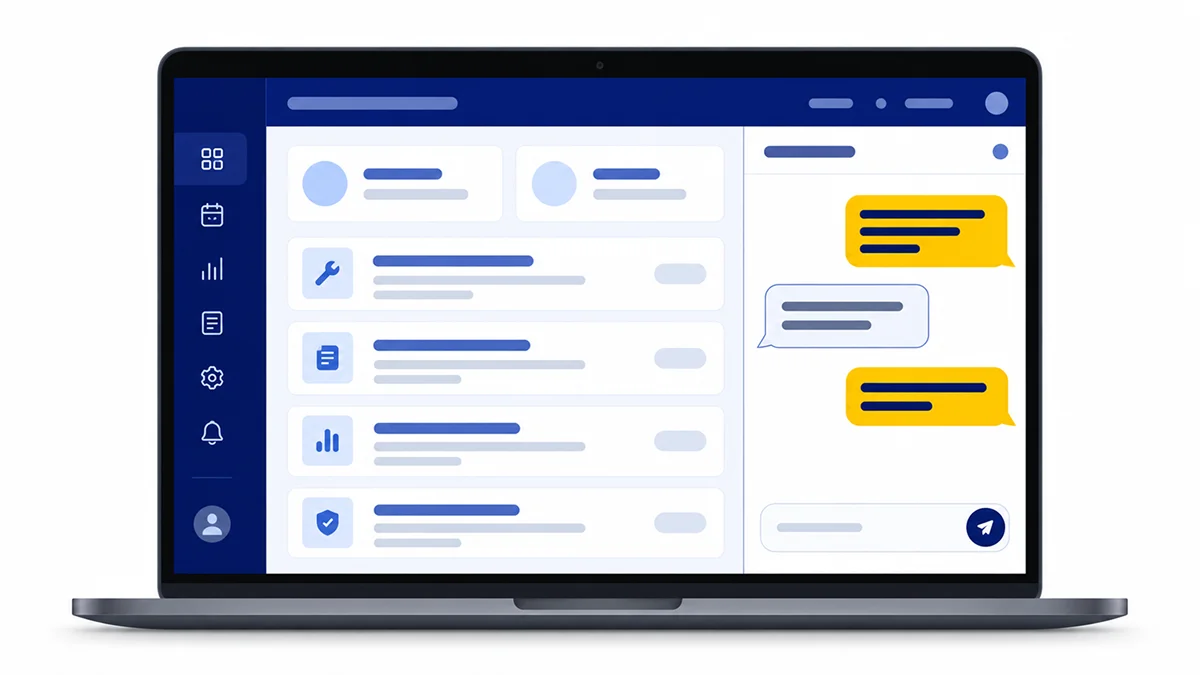
A branch coordinator in Coimbatore needs to set up a preventive maintenance schedule for a new building. It is nine in the evening. She does not want to raise a support ticket and wait until tomorrow, and she does not want to ring the one colleague who knows how.
She asks the assistant inside ElevatorPlus, in Tamil, and gets the answer step by step. No support tickets logged, no waiting for the head office to open, and no postponed customer commitments.
Trusted by Fastest-Growing Elevator Companies
Every operational system has a small number of people who really know how to use it, and everyone else asks them. That works until those people are busy, on leave, or have left.
What actually happens in the gap is not that the work stops. It is that somebody does it the wrong way, or does it outside the system, or does not do it. A PM schedule that never got created. A contract entered without its escalation clause. A branch that carried on using a spreadsheet because nobody could remember how to set up the module properly.
When technicians and coordinators hit an unfamiliar setting during month-end billing, an urgent lift breakdown, or an annual audit, they rarely stop work to wait for a software tutorial. Instead, workarounds start piling up. A technician marks a service call completed without attaching the mandatory machine-room inspection photo because he could not remember the upload requirement. A storekeeper issues an expensive traction motor or door operator without recording the serial number because the transfer screen looked different after a layout update. A newly opened depot continues using paper job cards for three months because the local team was unsure how to assign territory zones.
By the time management notices discrepancies during contract renewals or customer disputes, the original records are incomplete or scattered across paper notes and chat messages. Software adoption falters not because the platform is difficult, but because operational answers arrive too late to be useful in the field.
None of that shows up as a support ticket. It shows up eighteen months later as data you cannot trust.
It is trained on the ElevatorPlus documentation, configuration guides and support material. It answers from what it has been taught about the product, and it is available whenever somebody needs it rather than during our office hours.
The assistant understands the operational terminology of the lift industry - from traction machines, hydraulic power packs, and ARD battery units to POG contracts, statutory inspection certificates, and route allocations. You do not have to phrase questions like a software engineer to get a clear answer.
How do I create a multi-year AMC across two buildings? How do I add a new lift to an existing contract? How do I issue material to a technician from another branch? How do I split a routine route when a technician is on leave? How do I log an emergency passenger entrapment call on an expired contract?
Where do I set the reorder level for a part? Where do I change who approves expenses? Where is the lapsed contracts report? Where do I find the customer sign-off sheet for a newly commissioned installation? Where do I download the safety inspector compliance checklist?
How do I make a photograph compulsory before a job closes? How do I add a new branch? How do I change the renewal reminder recipients? How do I set up automatic notification alerts when an AMC payment is overdue? How do I assign separate spare parts pricing tiers to commercial versus residential properties?
What is the difference between semi-comprehensive and POG on a contract? What does this status mean? Which report shows lost customers? What is the operational distinction between 'Under Inspection', 'Under Breakdown', and 'Temporarily Grounded'? What does the safety audit expiry flag indicate on an asset record?
The assistant answers in the language the question was asked in. That matters more than it sounds, because the people most likely to need help are usually the ones least comfortable in English, and they are exactly the ones who will not raise a ticket.
A storekeeper who can ask a question in Marathi and get a usable answer in Marathi will ask it. The same person will not open a support form in English. He will guess, or he will ask a colleague, or he will do it on paper.
Field operations in the elevator trade depend on people working in machine rooms, hoistways, and regional depots. A junior technician in Rajkot troubleshooting a breakdown job at midnight understands Gujarati far better than software jargon. A stores coordinator in Madurai managing safety gear stock feels confident typing questions in Tamil. When staff receive clear, step-by-step guidance in their native language, they do not hesitate to use the system properly.
Language barriers often create silent resistance to digital tools. When an application insists on formal English terminology for every routine task, field staff quietly return to paper notebooks and personal chat messages. By responding in the user's preferred language, the assistant ensures that standard operating procedures are followed consistently across all your branches, regardless of technical background or regional location.


















The assistant is available at any hour. A question at nine in the evening gets an answer at nine in the evening, not at ten the next morning. If a service supervisor is closing monthly AMC billing over the weekend, work moves forward without waiting for Monday support hours.
The most common reason a new coordinator is slow in the first month is that they do not want to keep asking. The assistant absorbs the questions they would otherwise sit on. New joiners learn how to log a call, create a quotation, or print a delivery challan independently from their first week.
Every company has one person everybody asks. Giving that person their day back is usually worth more than the software licence. Your senior operations manager can concentrate on contract renewals, safety audits, and field performance instead of re-explaining how to export invoices.
When the answer is easy to get, people configure things correctly rather than working around them. Regional teams actually record penalty terms, set up spare part reorder thresholds, and map lift equipment specifications instead of bypassing fields.
The assistant answers questions about using ElevatorPlus. It is a knowledgeable colleague who has read all the documentation, available at any hour, in your own language.
It does not make operational decisions for you. It does not assign technicians, approve expenses, price a quotation or decide which lift to service next. It does not predict equipment failure, and it is not connected to sensors on your lifts.
We maintain a strict boundary between software assistance and business decision-making. The assistant is built to explain how ElevatorPlus functions - where settings live, how workflows operate, and how to resolve common user errors. It will never guess your business policies, alter your master records, or make financial judgments on your behalf. Your operational rules remain strictly under the control of your designated managers.
If you want to query your own business data, that is a different capability. ElevatorPlus supports MCP, so you can ask Claude, ChatGPT or Copilot about your contracts, renewals and service history directly.
Your technicians and office staff, asking how to use ElevatorPlus from inside the product, in their own language.
You, from outside the product, asking what is happening in your business through Claude, ChatGPT or Copilot.
Questions about using ElevatorPlus. How to do something, where to find something, how to configure something, and what a particular field or status means. That includes setting up AMC contracts, scheduling routine safety inspections, issuing spare parts from stores, creating approval rules, and generating customer service reports.
Yes, in the language the question was asked in, across the 18 languages ElevatorPlus supports. You can type in Hindi, Marathi, Tamil, Telugu, Gujarati, Bengali, Kannada, Malayalam, or English, and the assistant responds in that language using clear lift industry terminology.
Yes, at any time. That is one of the main reasons it exists. When a night shift technician or weekend duty coordinator needs to verify a process, they get an immediate answer rather than waiting until head office opens.
No. It handles the how-do-I questions that would otherwise wait for a reply. Anything it cannot answer still reaches a person. When you need custom document layout work, historical data migration, account changes, or dedicated engineering support, our human support team handles it during standard business hours.
The in-product assistant answers questions about using the software. It is trained on user manuals and support documentation, not on your private database. If you want to query your own contracts, renewals and service history, that is done through our MCP connectivity with Claude, ChatGPT or Copilot using your secure credentials.
No. It answers questions. It does not assign jobs, approve expenses, create invoices or change your data. It guides your staff on how to carry out those actions inside the software according to your company permissions.
From the ElevatorPlus documentation, configuration guides and support material it has been trained on. It reflects the current version of the software and the standard workflows established for elevator service providers.
On the demo, ask it the question your team gets stuck on most often. In whichever language you like.