Lift Entrapment Records: What UK Lift Companies Should Log
Lift Entrapment Records: What a UK Lift Company Should Log After Every Release
By Mr. Sumeet Katariya, ElevatorPlus ·
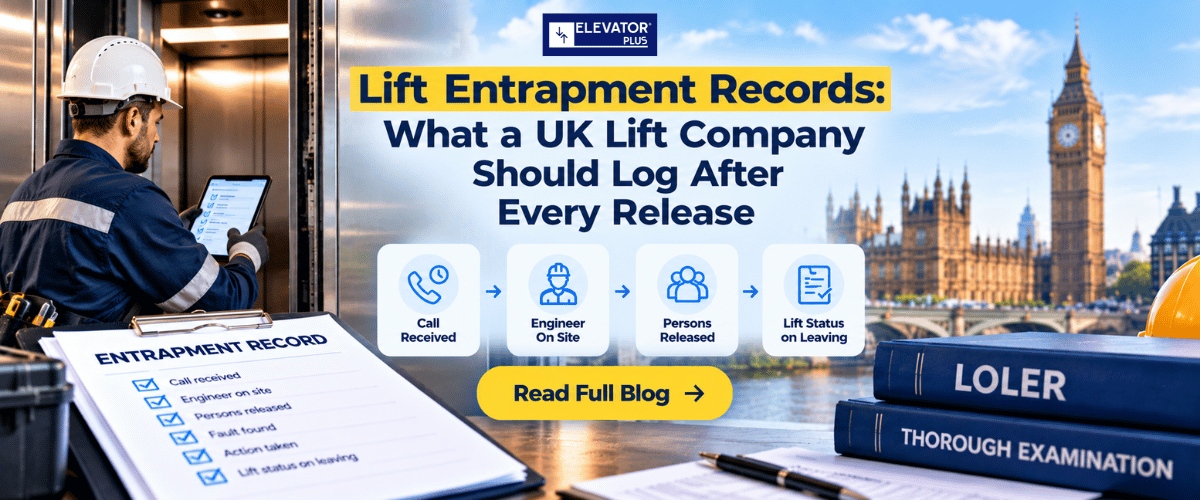
In short: Lift entrapment records should capture four times: call received, engineer on site, persons released, and lift status on leaving. Add what was found and what was done. Those records matter beyond the breakdown. Under LOLER, lifts carrying people are thoroughly examined at least every six months, and defects that could become a danger must be reported. A clean entrapment log gives the competent person, the managing agent and your own engineers the same facts, and shows which lifts keep failing.
Key takeaways
- An entrapment is a breakdown with people inside. Log it as its own record type, not as a generic callout note.
- Time stamps are the record. Call received, engineer on site, persons released and lift status on leaving are the four times that matter.
- Entrapment records feed the thorough examination. LOLER requires lifts carrying people to be thoroughly examined "at least every 6 months", and the examiner needs the fault history.
- Repeat entrapments on one lift are a pattern, not bad luck. Three on the same lift in a quarter is a conversation with the customer, in writing.
- Managing agents ask for the same five things. Count, response time, cause, out-of-service hours and what you are doing about it.
What this guide covers: What counts as an entrapment record · The fields to log after every release · How entrapment records connect to LOLER · Patterns that reveal a repeat-fault lift · What a managing agent asks for · FAQs
What are lift entrapment records, and why keep them separately?
Lift entrapment records are the log a lift company keeps every time people are trapped in a car and released. Most service desks record them as a breakdown with a note saying "persons trapped". That loses the detail you will be asked for later.
An entrapment has a different clock from a normal breakdown. Someone is waiting inside. The building is phoning. The managing agent will ask how long it took. The next thorough examination may ask what was found. If the record is a two-line note in a breakdown log, none of those questions has a clean answer.
This guide is about records only. Releases are carried out by trained, competent persons under the company's own procedure. Nothing here is release instruction.
For the wider picture of what maintenance software has to do for a lift business, see Elevator Maintenance Software: What It Has to Do (2026).
What should a lift company log after every entrapment?
Log the same fields every time, in the same order, at the time. A record written up the next morning is a memory, not a record.
| Field | What to capture | Who records it |
|---|---|---|
| Lift ID and site | Building, lift number, address | Service desk |
| Call received | Date and time, to the minute | Service desk |
| Reported by | Building staff, alarm centre, occupant, managing agent | Service desk |
| Persons trapped | Number, as reported | Service desk, confirmed on site |
| Injury reported | Yes or no, as reported by the persons or building staff | Engineer |
| Engineer assigned | Name and time assigned | Service desk |
| Engineer on site | Time of arrival | Engineer |
| Persons released | Time of release, and name of the competent person who carried it out | Engineer |
| Car position | Floor or between floors, as found | Engineer |
| Door state | Open, closed, part open, as found | Engineer |
| Fault found | Plain description, plus any controller fault code | Engineer |
| Cause | Confirmed cause, or "not yet confirmed" | Engineer |
| Action taken | Repair, adjustment, part fitted | Engineer |
| Parts fitted | Part, quantity | Engineer |
| Lift status on leaving | In service, or left out of service with reason | Engineer |
| Customer informed | Who, when, how | Service desk |
| Follow-up needed | Return visit, part on order, quote required | Engineer |
| Linked records | Previous breakdowns on this lift in the last 90 days | System |
Two fields get dropped most. "Cause not yet confirmed" is honest and useful. It tells the next engineer to keep looking. "Lift status on leaving" is the one a managing agent reads first.
How do entrapment records connect to LOLER and the thorough examination?
Where LOLER applies, lifts carrying people are thoroughly examined by a competent person. Regulation 9 sets the interval for lifting equipment for lifting persons at "at least every 6 months", unless an examination scheme sets otherwise. The result is the Report of Thorough Examination.
Regulation 10 deals with defects. The person making the thorough examination must "notify the employer forthwith of any defect in the lifting equipment which in his opinion is or could become a danger to persons". The employer must then make sure the lift is not used before the defect is put right. Where the report sets a time for the repair, the limit is that time.
Your entrapment log is not the Report of Thorough Examination. It sits underneath it. Three connections matter.
| Your record | What it feeds |
|---|---|
| Entrapment log for the period since the last examination | Gives the competent person the fault history before they start |
| Cause and parts fitted per entrapment | Shows whether a defect named in the last report has been put right |
| Repeat entrapments on one component | Points the examiner at what to look at closely |
When a report names a defect, link it to the open breakdown or entrapment that relates to it. Close the loop in writing when the work is done. A defect raised in one report and still open at the next is the record nobody wants to explain.
Whether LOLER or PUWER applies to a given lift depends on the premises. That question is covered in PUWER or LOLER: Which One Applies to Your Lift?. The examination itself is covered in Passenger Lift LOLER: Inspection, Testing & Reports.
Which patterns reveal a repeat-fault lift?
One entrapment tells you about a day. Twelve months of entrapment records tell you about a lift. Run these checks every quarter.
| Pattern | What it usually points to | What to do with it |
|---|---|---|
| Same lift, three or more entrapments in a quarter | An underlying fault the callouts are not fixing | Raise it with the customer in writing, with the dates |
| Same fault code repeated | A component near end of life | Quote for the repair or replacement |
| Entrapments soon after a service visit | Something disturbed or missed on the visit | Review the visit checklist for that lift |
| Door faults dominate | Door equipment, sills or misuse | Check whether the building side has a usage issue |
| Same time of day | Peak traffic, a cleaning routine, a power event | Ask the building what happens at that hour |
| Cause "not yet confirmed" twice or more | No one has owned the diagnosis | Assign one engineer to the lift until it is found |
The thresholds above are working rules, not regulations. Set your own and apply them the same way across every contract.
The pattern check is also how a maintenance contract gets renewed or lost. A managing agent who sees the same lift in your monthly report every month will ask what you are doing about it. Have the answer ready before they ask.
👉 Can you list every entrapment on one lift since its last thorough examination, in under five minutes? See how breakdowns are logged and assigned in ElevatorPlus →
What does a managing agent ask for?
Managing agents run portfolios. They answer to freeholders, residents and their own insurers. When they ask a lift company for entrapment data, the request is nearly always the same.
| They ask | What you need in your records |
|---|---|
| How many entrapments, per lift, this quarter | One record per entrapment, tagged to the lift |
| How long until the engineer arrived | Call received and engineer on site times |
| How long until people were released | Persons released time |
| What caused it | Fault found and cause fields |
| How long the lift was out of service | Status on leaving, plus return-to-service time |
| What is being done to stop it happening again | Follow-up field, quotes issued, defects closed |
Some service desks build this from emails and engineer phone calls. Then the report is late, and the numbers do not match the agent's own log. Both are worse than a bad number.
How ElevatorPlus handles entrapment records
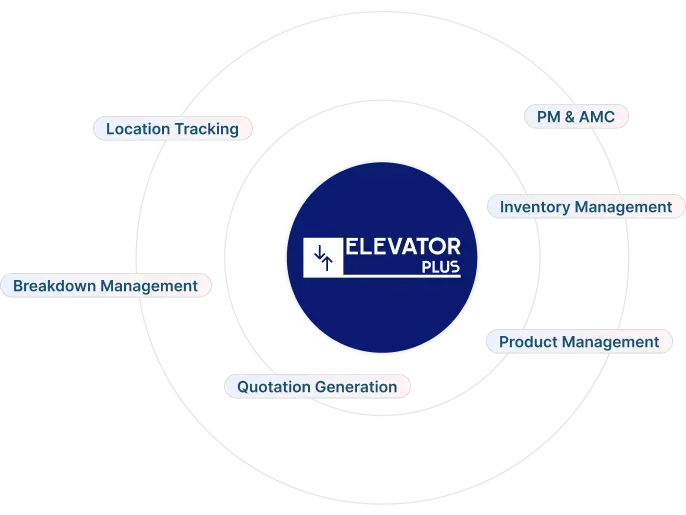
ElevatorPlus logs each breakdown, assigns it to an engineer and keeps the time stamps on one record. Checklists are set up aligned to LOLER and stay fully configurable, so an entrapment record can carry exactly the fields in the table above and match your own procedure and your customers' contracts.
ElevatorPlus also offers live technician location and distance travelled on Android, configurable to your own SOP. That gives the service desk an arrival time it did not have to phone for.
Every breakdown and entrapment sits against the lift's history, so the quarterly pattern check is a filter, not a spreadsheet exercise. More on how this works for UK lift companies is on our lift maintenance software for the UK page.
Frequently asked questions
1. What is a lift entrapment record?
It is the log a lift company keeps each time people are trapped in a lift car and released. It records call time, arrival time, release time, what was found and the lift's status on leaving.
2. Does LOLER require entrapment records?
LOLER requires thorough examination of lifts carrying people at least every six months and sets out how defects are reported. It does not set out an entrapment log format. The entrapment record is how you show the examiner and the customer what has happened since the last examination.
3. Who should carry out a release from a trapped lift?
Releases are carried out by trained, competent persons under the company's own procedure. This guide covers records only.
4. How long should entrapment records be kept?
Keep them at least until the next thorough examination has reviewed them, and in practice for the life of the maintenance contract. Your contract and insurer may set a longer period.
5. What does a managing agent want from entrapment records?
Entrapments per lift, time to arrive, time to release, cause, out-of-service hours and the plan to stop it recurring.
6. How many entrapments make a lift a repeat-fault lift?
There is no legal threshold. Set your own, for example three on one lift in a quarter, and apply it the same way across every contract.
7. Should an entrapment be logged as a breakdown?
Log it as a breakdown with an entrapment flag and its own fields. That keeps it in the lift's fault history and makes it easy to filter.
📲 Join our WhatsApp channel for compliance tips, updates: ElevatorPlus - Business Automation Tool
An entrapment is the call the building remembers. Your record of it is what everyone else will rely on: the competent person, the managing agent and your own engineer next month.
The fields are not complicated. The discipline is in logging them at the time, every time, on every lift.
Run the pattern check each quarter. A lift that keeps trapping people is telling you something, and the record is how you prove you listened.
👉 Find out what your breakdown records would show today. Book the Revenue Leak Walk-Through →
Related reading
- Passenger Lift LOLER: Inspection, Testing & Reports
- PUWER or LOLER: Which One Applies to Your Lift?
- Elevator Maintenance Software: What It Has to Do (2026)
- Reduce Elevator Breakdown Response Time: 2026 Guide
About the author. Mr. Sumeet Katariya is the founder of ElevatorPlus, the Elevator Business Operating System used by 200+ elevator companies across 20+ countries.
Sources: The Lifting Operations and Lifting Equipment Regulations 1998 (SI 1998/2307), regulations 9 and 10, legislation.gov.uk.
👉 Follow ElevatorPlus on,
Instagram LinkedIn Facebook YouTube Qoura Substack Twitter