
2027 Elevator Shows: What to Book Now & What Can Wait
By Sujit Katariya, ElevatorPlus ·
In short: Booking a stand at a 2027 elevator show commits you to about six months of preparation, not to a piece of floor. Companies that get value from a show decide the outcome first, put names against the diary weeks before the doors open, and treat every conversation as a record rather than a memory. Stand size is the least important variable. Staffing, preparation and the week after the show decide the result.
Key takeaways
- Decide the outcome before you decide the stand. If you cannot write the result you want in one sentence, and name the number you will count it with, you are not ready to sign anything.
- You are buying attention, not square metres. Everything that makes a stand conversation worth having sits outside the contract you sign.
- Staffing beats size. Four prepared people on a small stand will out-perform eight unbriefed people on a large one.
- Work backwards from show day. The deadlines that hurt are the ones nobody diarised: meeting invitations, demo devices, and the capacity to answer within a week.
- Floor bookings are the trap. At ISEE Mumbai 2024 we took roughly 48 floor bookings and almost none converted. A signature on an exhibition floor is enthusiasm, not intent.
What this guide covers: the decision test · what you are really buying · staffing over stand size · the working backwards timeline · the last four weeks · briefing the people on the stand · what to capture about every visitor · why floor bookings do not convert · the seven day follow up · FAQs
What outcome would make this worth it, and can you count it?
Start with a sentence, not a floor plan. Something like: we want twelve serious conversations with lift companies operating more than fifty units, and six of them to accept a site visit within a month.
That sentence tells you who you are looking for, which changes who you send. It tells you how many, which tells you whether you need a stand at all or whether a walking pass and a diary would do. And it gives you a number to hold up afterwards. Most exhibitor disappointment starts with never having written it.
Here is the test we apply before committing to any show.

| Question | Book the stand if | Walk the floor instead if |
|---|---|---|
| Who are you trying to meet? | You can name twenty companies or roles you expect to be there | You hope the right people walk past |
| What do you want them to do next? | There is one clear next step and you can deliver it | The next step is "stay in touch" |
| Who is going? | You can free two to four people for the full run | You will pull whoever is free that week |
| What happens in the following week? | The follow up week is already blocked out | Everyone returns to normal workload on the Monday |
| How will you know it worked? | You named a number and a date to measure it by | You will judge it on how busy the stand felt |
Three or more answers in the right hand column and you should attend without a stand. That is a respectable decision, and cheaper in every dimension.
What are you really buying when you book a stand?
Not floor space. Floor space is the smallest part of what you commit to.
You are buying a fixed date. Once the contract exists, product decisions, printed material, demo readiness and staffing all get pulled towards it, which is often the real benefit. A show is a deadline other people enforce.
You are buying the right to be found by people who did not know you exist. Everything else you do to reach a lift company requires knowing their name first. An exhibition inverts that.
And you are buying an obligation. Everyone you speak to expects something afterwards. If you cannot service that, the show has cost you goodwill as well.
Budget in three layers, in this order. The space and its build. The people, including their time away from billable work, the layer most companies forget to count. Then follow up capacity, which decides whether the first two produced anything. If the third layer has no room, reduce the first.
Why does stand size matter less than who is standing on it?
Because a stand does not persuade anyone. People do.
A larger stand gets you more casual footfall, and casual footfall is mostly students, job seekers and people selling to you. None of it is why you came. The conversations that matter are with a small number of people, and they will find a small stand if the right person is on it.
What a bigger stand genuinely buys is somewhere to sit down. If your useful conversation runs twenty minutes and involves a screen, you need two seats and a table more than frontage. That is a specific requirement with a specific answer, and a better basis for choosing a size than a feeling that bigger looks serious.
The failure mode of a large stand is also worse. A large stand with three tired people looks abandoned. A small one just looks small. So staff for the whole run rather than the peak, and build rest into the rota, because nobody is sharp at four in the afternoon on the last day.
What does the timeline look like working backwards from show day?
Working forwards produces a list. Working backwards produces a schedule, because each step reveals what must be true before it.
| Working back from show day | What has to be done | What it depends on |
|---|---|---|
| Six months or more | Decide to exhibit, confirm dates with the organiser, reserve space, write the outcome sentence | The decision test above |
| Four to five months | Confirm who is going, book travel and rooms, start any visa or documentation process | Space confirmed, people released |
| Three months | Build brief, the one message on the main panel, anything with a long lead time | Knowing what you are there to say |
| Eight weeks | Build the target list of people you want to meet, start inviting them to specific times | The outcome sentence |
| Four weeks | Printed material final, demo devices tested offline, capture method practised | Message and layout settled |
| Two weeks | Staff briefing, shift rota, second round of invitations, follow up week blocked | Everything above |
| Show week | Run the stand, capture every conversation the same way | The briefing |
| The following seven days | The follow up sequence, in order | Capacity reserved months earlier |
Two notes. The eight week row is the one companies skip, and it decides the result. And the last row is not an afterthought bolted onto the plan. It is the reason the plan exists.
What has to be ready four weeks before the doors open?
Six things, all unglamorous, all the difference between a stand that works and one that does not.
The one message. A person walking past gives you about two seconds. If your main panel carries your company name and the word solutions, you have spent them on nothing. Say what you do and for whom, in the plainest words available.
Printed material you would not be embarrassed to hand a stranger. One piece is enough. Nobody carries three.
Demo devices that work without conference wifi. Assume the network fails on the busiest morning, and show whatever you show from the device itself.
The capture method, agreed and practised. Decide now how a conversation becomes a record, and make sure everyone does it the same way.
A shift rota with names against times. Not a general understanding that people will cover.
The follow up week, blocked out. Do it before you travel. If everyone returns to a full workload on the Monday, the show did not happen.
How do you brief the people standing on the stand?
Assume nothing. The most common cause of a wasted show is a team that turned up knowledgeable and unbriefed. Cover five things, in writing, before travel.
The outcome sentence, so everyone knows what a good day looks like.
The qualifying questions. Two or three, no more. How many units are you looking after. Who handles your service scheduling today. What breaks most often. Short questions that invite a real answer.
The disqualifying answer, and how to leave politely. Nobody teaches this. A stand has a finite number of conversation minutes, and a friendly twenty minutes with someone who will never buy costs you the person behind them. Agree a phrase in advance that ends a conversation warmly.
The one thing to show. Not a tour. One screen that answers the question just asked.
What never to say. No promises about delivery dates, no pricing on the floor, no commitments the person cannot keep. Which brings us to the biggest one.
👉 Deciding whether a 2027 show earns its place in your year?
See where ElevatorPlus is exhibiting and what we are showing →
What should you capture about every visitor, and how?
A visiting card is not a record. It is a name and a number with no context, and by the second evening you will not remember which conversation it belonged to.
Capture five fields for every conversation worth remembering, at the moment it ends. Who they are and what they actually do, in your words rather than the job title on the card. What they came to the stand about, in their language. Roughly how big their operation is. Exactly what you promised them. And a one to five rating of how real this is, decided by the person who had the conversation, while it is fresh.
That last field saves your following week. Ten records rated four or five get answered properly. A hundred undifferentiated cards get answered generically, or not at all.
Do the capture on the stand, on a phone, somewhere everyone can reach. Not on paper to be typed up later, because later does not arrive. Photograph the card as an attachment to the record, never as the record.
Why do floor bookings taken at a show usually not convert?
Because a signature given in a crowded hall is a social act, not a commercial one.
We have the number for this one. At ISEE Mumbai 2024 we took roughly 48 floor bookings. Almost none converted.
The reason is not dishonesty. The floor produces a temporary state. Someone is away from their office, mildly overwhelmed, enjoying a conversation, and agreeing feels like the natural way to end it. No procurement discussion, no internal debate, none of the friction that makes a real decision real. Then they go home and the signature has nothing behind it.
So stop optimising for signatures. Optimise for the next specific appointment. A named date, a named time, a named person, and something that requires preparation on their side. Preparation is the test. Someone who will spend an hour pulling their own numbers together before your call is real in a way a floor booking never is.
What does the seven day follow up sequence look like?
Seven days, not thirty. Interest decays fast, and by the third week you are a stranger.
Day one, same evening. Every four and five rated record gets a short personal message from the person who spoke to them, referencing the specific thing discussed. No attachments, no brochure, no template.
Day two. Everything you promised on the stand gets delivered. The document, the answer, the link. It goes today even if it is incomplete. A partial answer now beats a full answer next month.
Day three. The threes get a message. Shorter, still specific, one clear next step.
Day four. Call the fours and fives who have not replied. A call, not another message.
Day five. Book the appointments. This is the purpose of the week, and everything before it exists to make this call reasonable.
Day six. Ones and twos go onto your ordinary list. No individual effort, no guilt about it.
Day seven. Sit down as a team and write the real number against the outcome sentence. Twelve conversations, six site visits, how many did we get. Write what you would do differently, then file it where next year's decision will find it. That hour turns one show into a repeatable capability instead of an annual gamble.
Frequently asked questions
1.How far ahead should we book a stand at a 2027 elevator show?
Earlier than feels necessary, because position is allocated largely by who commits first and a poor position cannot be fixed later. Contact the organiser, ask what remains, and get the dates in writing before you commit anything.
2.Should we confirm show dates ourselves rather than trusting a listing?
Yes, and it is not a formality. Listings, aggregator pages and even official pages can carry inconsistent information. Get the dates in writing before any non-refundable commitment. If two sources disagree, treat both as unconfirmed until the organiser resolves it.
3.Is a small stand a waste of time?
No. A small stand with two prepared people and a table beats a large stand with unbriefed staff. Choose size by what your conversations physically need, which is usually somewhere to sit and a screen.
4.What is the single most skipped preparation step?
Inviting people to specific meeting times, starting roughly eight weeks out. A stand with twelve booked conversations is worth more than a stand with forty accidental ones.
5.Do bookings taken on the exhibition floor convert?
Usually not. At ISEE Mumbai 2024 we took roughly 48 floor bookings and almost none converted. Aim instead for a scheduled appointment that requires preparation on the visitor's side, which is a far better signal of intent.
6.What should we record about each visitor?
Who they are, what they came to ask about, the rough size of their operation, exactly what you promised, and a one to five rating decided on the spot. Capture it digitally on the stand, not on paper for later.
7.Where is ElevatorPlus exhibiting?
We are at ISEE Delhi 2026, 3 to 5 December 2026, at Yashobhoomi IICC Dwarka in New Delhi, on booth 1H16. We are also at the Elevator Escalator Expo in Gandhinagar on 17, 18 and 19 March 2027, on booth C21.
📲 Join our WhatsApp channel for compliance tips, updates: ElevatorPlus - Business Automation Tool
A show is not a marketing expense. It is a short, unusually honest test of whether your company turns attention into appointments and appointments into work. Most companies fail that test in the week afterwards, not on the floor.
The decision is simpler than it looks. Write the outcome sentence. If you cannot write it, do not book. If you can write it but cannot free the people or the following week, attend without a stand.
If you do book, remember what moves the result. Not size, not the build, not how many cards you collect. The eight week invitations, the four week preparation, the briefing, the capture discipline on the floor, and the seven days afterwards.
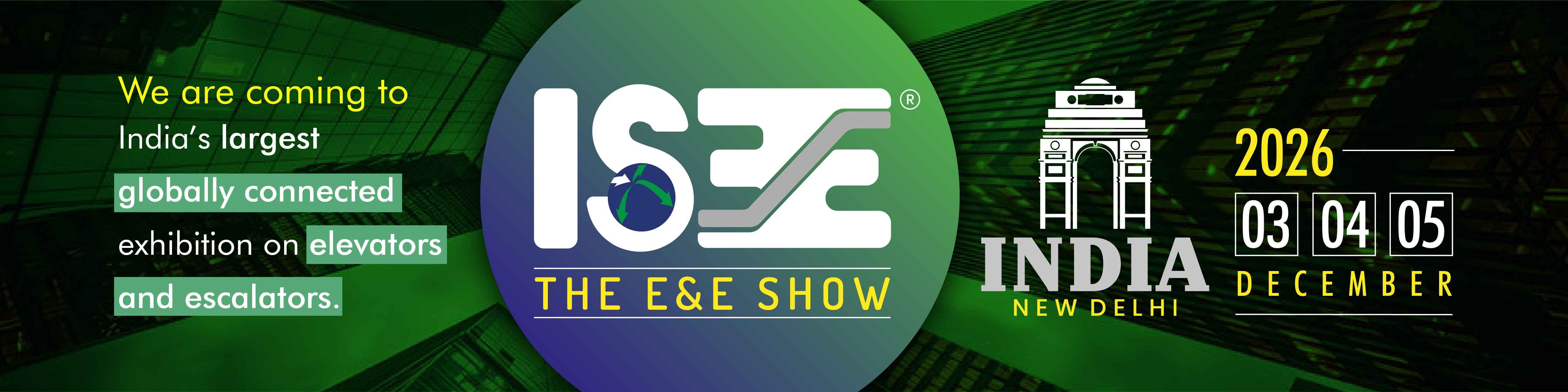
One warning applies to every show you are weighing up for 2027. Confirm the dates with the organiser, in writing, before money moves. Published listings are not always internally consistent, and an inconsistency caught while planning is far cheaper than one caught after booking travel. The two event pages below carry what we can confirm about ours.
👉 See how ElevatorPlus turns show conversations into scheduled work. Book a demo →
Related reading
- ElevatorPlus at ISEE Delhi 2026, booth 1H16
- ElevatorPlus at the Elevator Escalator Expo, Gandhinagar, booth C21
- Lead capture for conversations that start away from your desk
- Quick quotation, for the quote you promised on the stand
- Project management for the work a show produces
About the author. Sujit Katariya - ElevatorPlus, the Elevator Business Operating System used by 200+ elevator companies across 20+ countries.
👉 Follow ElevatorPlus on,
Instagram LinkedIn Facebook YouTube Qoura Substack Twitter