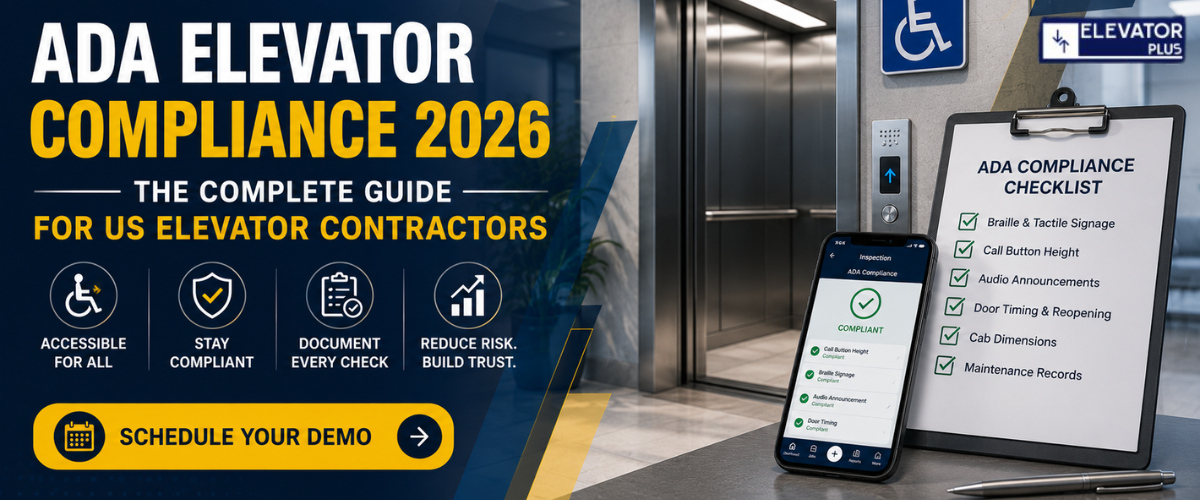
ADA Elevator Compliance 2026: US Contractor Guide
Published · Last updated
ADA elevator compliance 2026
Why ADA Elevator Compliance Is Becoming a Bigger Business Risk for US Elevator Contractors
The Americans with Disabilities Act has regulated elevator accessibility in the United States since 1990.
But in 2026, ADA elevator compliance is no longer just a regulatory requirement.
It is becoming:
• A legal protection issue
• A contract retention issue
• A reputation issue
• A competitive advantage
Most US elevator contractors still think accessibility violations are rare.
The reality is very different.
What Is Actually Happening Across the US Elevator Industry
• Department of Justice enforcement is increasing
• Property owners face higher legal exposure
• Building refinancing now includes accessibility reviews
• Commercial properties are under greater compliance scrutiny
👉 And when accessibility problems are discovered, building owners immediately ask:
“What did the elevator contractor report during maintenance visits?”
💡 Reality Check
If your elevator maintenance records USA do not clearly document ADA inspections and accessibility checks, your company is exposed to unnecessary operational and legal risk.
🚀 Want to protect your service contracts while improving compliance visibility
👉 Book Your Free Strategy Call Now
What ADA Elevator Compliance 2026 Actually Requires ?
ADA elevator compliance in the United States is governed by:
• ADA Standards for Accessible Design
• ADA Title III
• ANSI A117.1 standards
• Section 407 accessibility requirements
US Elevator Accessibility Requirements Include
• Proper elevator call button height
• Functional Braille and tactile signage
• Operational audio floor announcements
• Correct elevator door timing
• Reliable reopening devices
• Required cab dimensions and accessibility clearance
👉 These are not optional recommendations.
They are federal accessibility requirements for commercial and public buildings across the United States.
⚡ Think About This
If an ADA accessibility complaint was filed tomorrow against one of the elevators your company services, could you prove your technicians checked and documented compliance properly
The Most Common ADA Elevator Violations US Contractors Encounter
Most ADA issues are not installation failures.
They are maintenance failures.
1. Worn Braille and Tactile Signage
Braille signage gradually deteriorates over time.
Many buildings still operate with signage that no longer meets elevator accessibility standards USA.
What Contractors Should Do
• Inspect signage during every PPM visit
• Photograph visible wear
• Notify building owners in writing
👉 Documentation protects both the contractor and the client.
2. Elevator Door Timing Problems
This is one of the most serious and most common ADA violations in the US elevator industry.
Doors that close too quickly create accessibility barriers for mobility-impaired passengers.
Why It Happens
• Timing systems drift over time
• Door adjustments are not reverified
• Maintenance checks are inconsistent
👉 Every preventive maintenance visit should verify door timing performance.
3. Malfunctioning Reopening Devices
Many reopening systems partially fail without immediate detection.
Common Problems
• Sensors trigger only on physical contact
• Proximity detection becomes unreliable
• Inconsistent reopening behavior develops
👉 These failures create both compliance and safety risks.
🚀 Want to improve accessibility inspection consistency across your service portfolio
👉 Book Your Free Strategy Call Now
4. Non-Working Audio Announcements
Audio floor announcements are frequently overlooked during maintenance visits.
Why This Matters
• ADA accessibility requires functioning announcements
• Volume and clarity must remain operational
• Audio systems degrade gradually over time
👉 These checks should become standard during every maintenance visit.
5. Elevator Call Button Height Violations After Renovations
Building renovations often create unintended accessibility violations.
What Happens
• Lobby redesigns reposition call panels
• New wall finishes alter button accessibility
• Contractors fail to reverify measurements
👉 Accessibility compliance can change even when the elevator itself was not modified.
📊 Imagine This
A property owner receives an ADA complaint.
Your company immediately provides:
• Timestamped accessibility inspection records
• Digital maintenance reports
• Written remediation recommendations
• Photo documentation of every compliance check
👉 That level of documentation changes the entire legal and professional conversation.
How to Build ADA Compliance Into Every Preventive Maintenance Visit
ADA monitoring should not be treated as a separate process.
It should become part of every preventive maintenance routine.
Door System Checks
• Verify opening width requirements
• Measure and record door timing
• Test reopening devices independently
Cab Interior Checks
• Inspect flooring condition
• Verify handrail stability
• Test audio announcement systems
Call System Checks
• Confirm call button functionality
• Verify visual indicators and hall lanterns
• Recheck button accessibility positioning
Documentation Requirements
• Record all findings digitally
• Store maintenance history centrally
• Notify clients immediately about deficiencies
👉 Consistency is what protects your business.
🚀 Want every maintenance visit to strengthen compliance instead of creating risk
👉 Book Your Free Strategy Call Now
Why Elevator Compliance Documentation USA Is Now Critical
In the US elevator industry, documentation quality is becoming just as important as maintenance quality.
Why Paper Records Fail
• Difficult retrieval during inspections
• Missing historical maintenance records
• No centralized accessibility tracking
• Weak legal protection during disputes
What Modern Elevator Companies Use
• Elevator compliance software USA
• Elevator maintenance software USA
• Digital elevator preventive maintenance logs
• Elevator service management software
👉 Digital documentation creates operational visibility and legal protection.
⚡ Think About This
If an AHJ inspector requested ADA maintenance documentation today, how quickly could your team retrieve it
How Elevator Compliance Software USA Reduces Risk
Modern compliance systems create structured operational workflows.
What These Systems Improve
• Accessibility inspection tracking
• ADA documentation storage
• Maintenance record visibility
• Audit preparation speed
• Client reporting consistency
👉 Compliance becomes measurable instead of reactive.
🚀 Want to become permanently audit-ready across your service portfolio
👉 Build a digital compliance operation before enforcement issues appear
Turning ADA Compliance Into a Competitive Advantage
Most elevator contractors treat ADA accessibility as a passive responsibility.
Leading companies treat it as a premium service offering.
Why This Matters
Building owners increasingly want contractors who:
• Understand accessibility risk
• Provide structured compliance reporting
• Monitor deficiencies proactively
• Protect properties from legal exposure
👉 Compliance-focused contractors build stronger client relationships and higher contract retention.
📦 Think Bigger
What if your compliance documentation became the reason building owners renewed your contracts automatically
The Future of ADA Elevator Compliance in the USA
Accessibility enforcement is becoming more data-driven every year.
What’s Coming Next
• Digital compliance reporting
• Automated inspection tracking
• AI-based maintenance auditing
• Real-time accessibility monitoring
• Centralized compliance dashboards
👉 US elevator contractors adopting these systems early will lead the market.
In the US elevator industry, ADA compliance is no longer just about avoiding violations.
It is about proving operational professionalism.
There are two types of contractors:
• Those reacting after accessibility complaints happen
• Those proactively monitoring and documenting compliance every day
👉 The second group wins.
They reduce risk.
Build trust.
And strengthen long-term service relationships.
👉 If your ADA compliance process still depends on handwritten notes and disconnected systems, your business is exposed to avoidable risk
👉 Build a structured compliance operation before the next inspection, complaint, or legal review exposes the gaps
👉 Book Your Free Strategy Call Now
👉 Improve compliance visibility. Strengthen client trust. Protect your contracts.
📢 𝗦𝘁𝗮𝘆 𝗔𝗵𝗲𝗮𝗱 𝘄𝗶𝘁𝗵 𝗘𝗹𝗲𝘃𝗮𝘁𝗼𝗿𝗣𝗹𝘂𝘀
Book Your Free Strategy Call Now.
Don’t miss more exclusive elevator industry updates, expo news, and smart business insights.
👉 𝗙𝗼𝗹𝗹𝗼𝘄 𝗘𝗹𝗲𝘃𝗮𝘁𝗼𝗿𝗣𝗹𝘂𝘀 𝗼𝗻:
Instagram | LinkedIn | Facebook | YouTube