Elevator Maintenance Audit: What Inspectors Ask to See
By Mr. Sumeet Katariya, Founder & CEO, ElevatorPlus ·
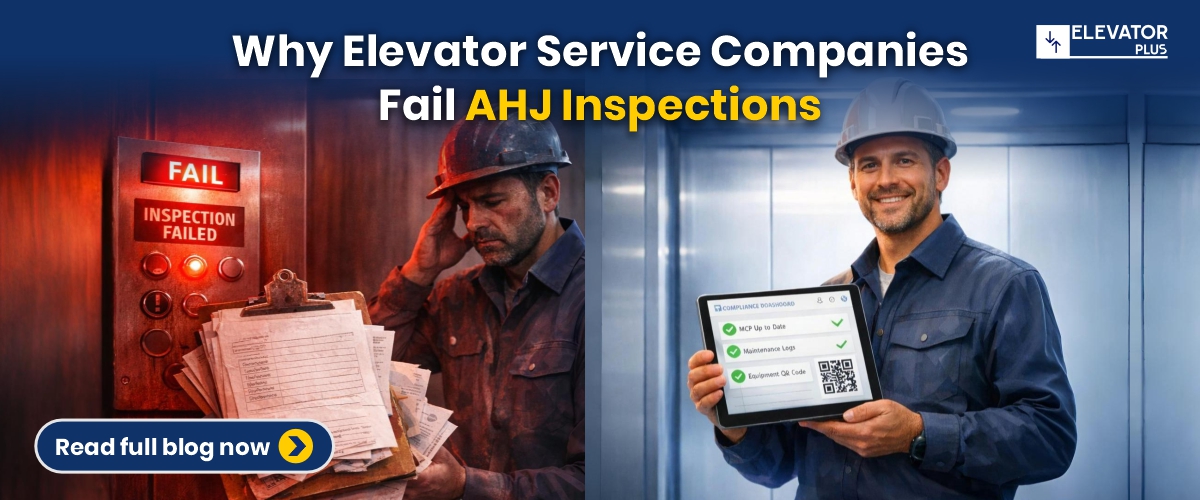
In short: Most AHJ inspection failures aren't a service quality problem they're a documentation problem. Incomplete maintenance logs, missing test records and unresolved violation history are the top reasons U.S. elevator companies fail inspections, and all three are fixable by moving MCP (Maintenance Control Program) records off paper and spreadsheets and into a system built for audit-ready compliance.
Key Takeaways
- AHJ inspections check your maintenance logs, test records, violation history and code compliance — not just the elevator itself.
- The five most common failure causes are incomplete logs, missing test records, unresolved violations, disorganised data, and no photo evidence of repairs.
- Digital MCP records with QR-tagged assets, timestamped checklists and photo uploads turn inspection prep from a scramble into a one-click export.
What Is an AHJ Inspection?
The Authority Having Jurisdiction (AHJ) is the local body responsible for confirming elevators comply with ASME A17.1 and applicable state or municipal codes. An AHJ inspection typically covers:
- Maintenance logs
- Test records (including Category 1 and 5-year load tests)
- Resolution of past violations
- Compliance with state and local elevator codes
A failed inspection can lead to elevator shutdowns, fines, project delays, contract cancellations, higher liability exposure, and AMC non-renewals.
The 5 Most Common Reasons Elevator Companies Fail AHJ Inspections
1. Incomplete maintenance logs. AHJs expect consistent, traceable records. Paper logs are easy to misplace and hard to verify.
2. Missing test records. Without clear documentation of required safety tests, an inspector has no basis to pass the unit.
3. Unresolved violation history. AHJs want to see that past issues were tracked and closed out, not just noted.
4. Disorganised maintenance data. Records scattered across emails, folders and multiple apps don't hold up as a compliance trail.
5. No visual documentation. Without photo evidence of completed repairs, it's the technician's word against the inspector's.
The Fix: Move Maintenance Control to a Digital System
A system built for elevator businesses closes these gaps directly:
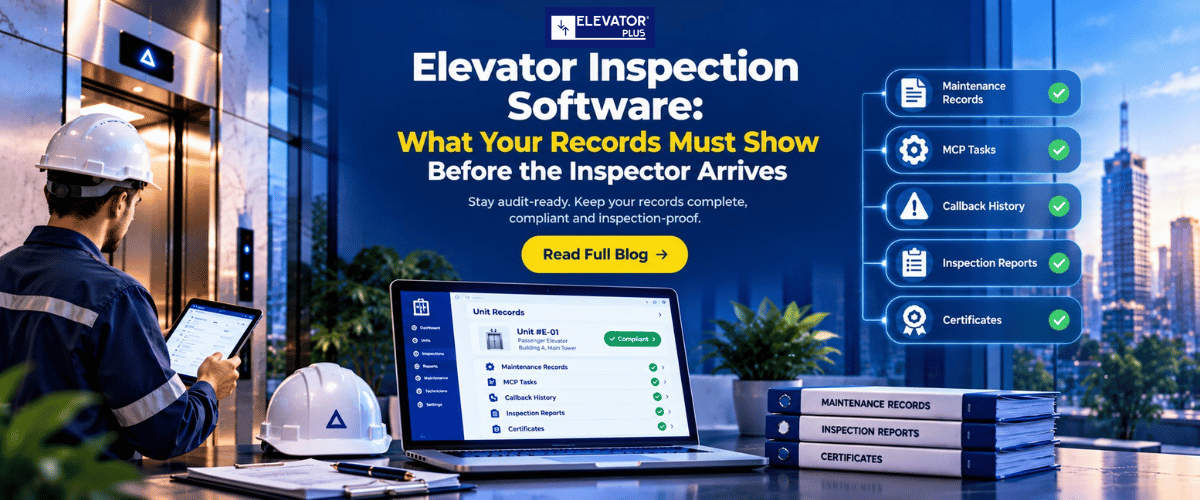
- QR-based asset tagging — scan a unit to pull its full log, test and repair history in seconds.
- Digital maintenance checklists — technicians log tasks on-site, so nothing gets missed or backfilled later.
- Photo uploads — attach visual proof to every repair or service job.
- Centralised records — everything stored in one searchable place instead of split across tools.
- One-click audit-ready exports — generate an inspection-ready report on demand instead of assembling one under pressure.
Business Benefits Beyond Compliance
Passing inspections is the baseline, not the ceiling. The same records discipline also helps companies reduce legal risk, retain clients through visible reliability, streamline day-to-day operations, and win more contracts on the strength of a clean compliance record.
Note: figures such as improvement percentages in client-results claims should carry a source or be described qualitatively until verified flagging for your review before this goes live, consistent with the "no unsourced stat" standard applied to the rest of the site.
FAQs
What does an AHJ actually check during an inspection?
Maintenance logs, required safety test records, how past violations were resolved, and whether the elevator meets ASME A17.1 and local code requirements.
Why do most elevator companies fail AHJ inspections if the elevator itself is fine?
Because the failure is usually a records problem, not a mechanical one — incomplete, scattered or unverifiable documentation, not a fault with the equipment.
How does digital MCP record-keeping reduce inspection failures?
It replaces paper and spreadsheets with timestamped, searchable logs, test records and photo evidence that can be exported in one click when an inspector asks for them.
Do I need photo evidence for every repair?
It isn't universally mandated, but without it you have no way to prove a repair was completed as described if a dispute or re-inspection comes up.
Is this only relevant for large portfolios?
No — the same documentation gaps that fail a 2,000-unit portfolio's inspection will fail a 20-unit one; the fix scales down as easily as it scales up.
Related Reading
- Elevator Business Automation Checklist
- Elevator Business Service Software in the USA
- Best Elevator Service Software (2026)
About the author: Mr. Sumeet Katariya is the founder of ElevatorPlus, the Elevator Business Operating System used by 200+ elevator companies across 20+ countries.
Follow ElevatorPlus on Instagram · LinkedIn · Facebook · YouTube · Quora · Substack · Twitter/X