
Elevator Maintenance Software Australia 2026 | AS 1735
By Nutan Mandal, ElevatorPlus · Published 3July 2026 · Last updated 3 July 2026 · ~7 min read · Compliance reviewed by Mr. Sumeet Katariya
In short: Australian lift companies already live in software they expect good tools. What many still don't have is a single platform that connects compliance (AS 1735 maintenance, state safety duties), dispatch and the commercial side of the business. This guide covers what to look for so growth doesn't come with more admin in 2026.
Key takeaways
- Australia has an estimated 300–500 independent lift firms in a mature, SaaS-comfortable market high value per customer.
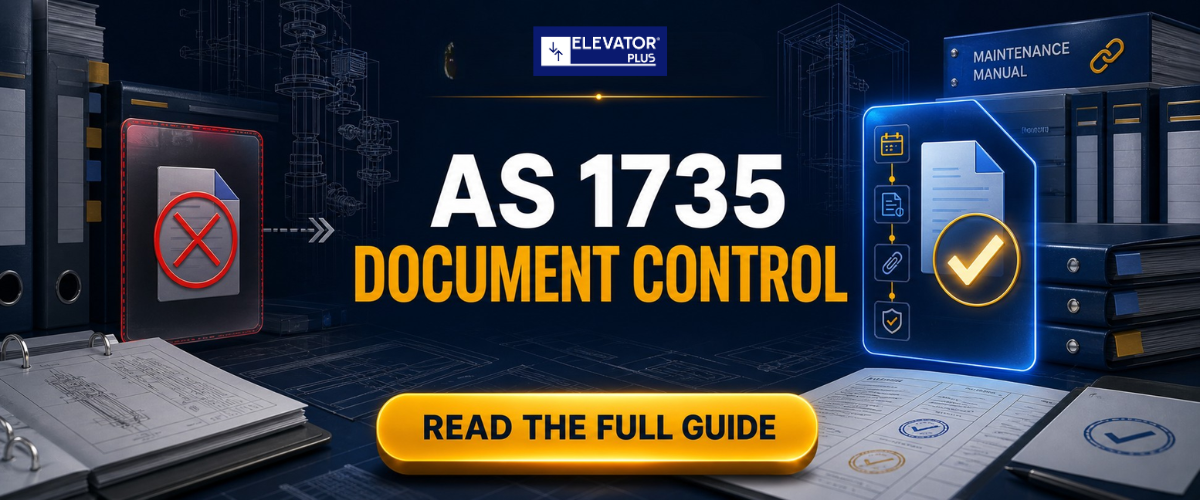
- Maintenance aligned to AS 1735 and state work-health-and-safety duties means documentation matters, not just the wrench work.
- The opportunity isn't adopting software Australian firms already do. it's consolidating scattered tools into one elevator-specific platform.
- Route-efficient dispatch matters in a country of long distances and spread-out portfolios.
- ElevatorPlus runs across 20+ countries, replacing the spreadsheet-plus-three-apps setup with one system.
What this guide covers: the Australian context · the consolidation opportunity · what the software must do · scattered tools vs one platform · FAQs.
What makes the Australian market distinct?
Two things. First, it's a mature SaaS market Australian lift firms aren't scared of software, which means the conversation isn't "should we digitise" but "why are we using five tools that don't talk to each other." Second, safety expectations are high: maintenance aligned to AS 1735 standards and state-based work health and safety obligations puts a premium on documented, scheduled service.
Put those together and you get a specific kind of pain. A firm might have a scheduling app, a separate invoicing tool, a shared drive for compliance docs, and a messaging app for the field each fine on its own, none of them joined up. The cost isn't a missing tool. It's the gaps between them.
The honest version: most Australian lift firms don't need more software. They need fewer systems doing more, joined into one picture of the business.
What should elevator maintenance software do here?
- Schedule maintenance per lift aligned to AS 1735 intervals, with documentation built in.
- Dispatch efficiently across distance, with the building's history on the technician's device.
- Hold compliance records that are instantly retrievable for clients and regulators.
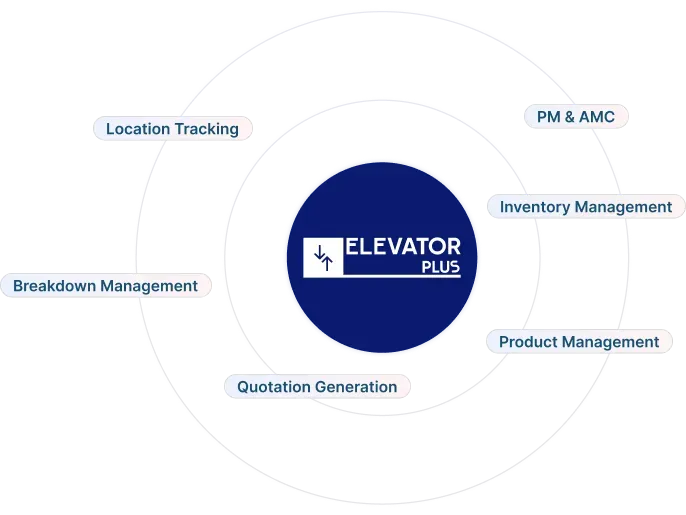
- Connect the commercial side quoting, invoicing, AMC renewals to the service side.
- Give the owner one dashboard instead of five logins.
Definition: AS 1735: the Australian Standards series governing lifts, escalators and moving walks, including design, installation and maintenance requirements that underpin safe operation.
Scattered tools vs one platform
| Multiple disconnected apps | One elevator platform | |
|---|---|---|
| Compliance docs | In a separate drive | Linked to each lift |
| Scheduling & invoicing | Different systems | Connected end to end |
| Field updates | Messaging app | In the job record |
| Owner's view | Five logins | One dashboard |
| Reporting | Manual stitching | Built in |
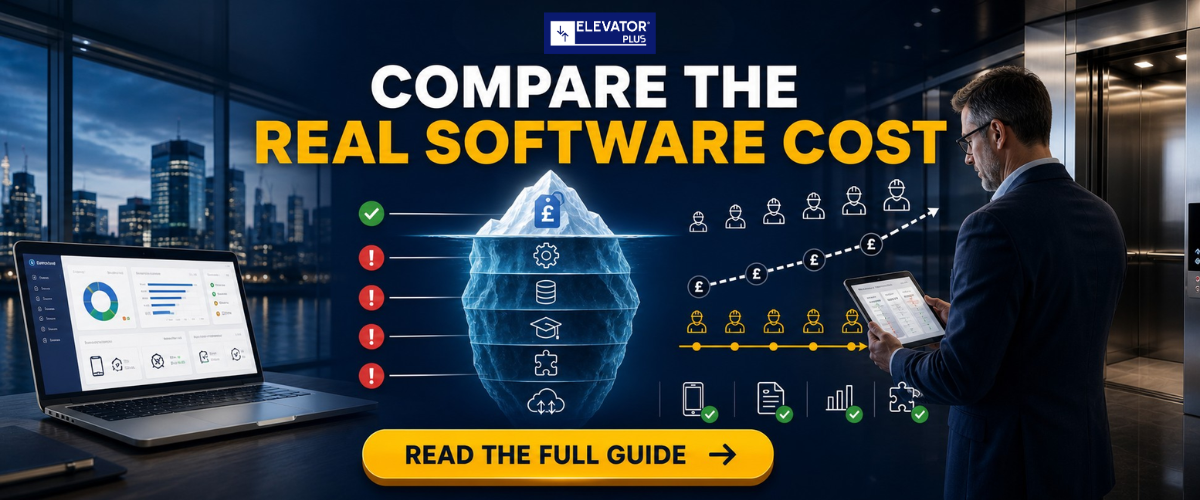
This consolidation is the same move purpose-built firms are making globally see why generic stacks fall short in our comparison guide and the bigger pattern in the global state of the elevator service industry.
👉 See one platform on your operations. Book an ElevatorPlus demo →
📲 Join our WhatsApp channel for compliance tips, updates: ElevatorPlus - Business Automation Tool
Frequently asked questions
1. What is the best elevator maintenance software for Australian lift companies?
The best fit is an elevator-specific platform that combines AS 1735-aligned maintenance scheduling, compliance records, dispatch and the commercial side (quoting, invoicing, AMC renewals) in one place replacing several disconnected apps. ElevatorPlus is purpose-built and runs across 20+ countries.
2. Does it help with AS 1735 and state safety compliance?
Yes. Maintenance is scheduled to the right intervals and every visit is documented per lift, so compliance records are retrievable instantly rather than scattered across drives.
3. We already use several tools. Why switch?
The value is consolidation. One elevator-specific platform removes the gaps between disconnected apps, where time and accountability usually leak.
4. Does it handle long-distance, multi-region dispatch?
Yes. Dispatch is route-aware and technicians carry each building's history, which matters across Australia's spread-out portfolios.
5. Is it built for the commercial side too?
Yes. Quoting, invoicing and AMC renewals connect to service, so the whole business runs on one system.
Australian lift firms don't have a software problem they have a fragmentation problem. Pull compliance, dispatch and commercials into one elevator-specific platform, and you grow without growing the admin pile.
👉 Consolidate your stack — book a demo →
Related reading
- ElevatorPlus vs Spreadsheets & Generic FSM Tools
- The Global State of the Elevator Service Industry 2026
- Elevator Maintenance Software UK 2026: LOLER & EN 81
About the author :Nutan Mandal is part of the ElevatorPlus team, which builds the Elevator Business Operating System used by 200+ elevator companies across 20+ countries.
Sources: Australian independent firm estimates ElevatorPlus Global Market Intelligence 2026 (LEAA proxy) and IBISWorld Australia elevator installation & maintenance; AS 1735 Australian Standards for lifts, escalators and moving walks.
👉 Follow ElevatorPlus on,