Why African Elevator Companies Lose Contracts | ElevatorPlus
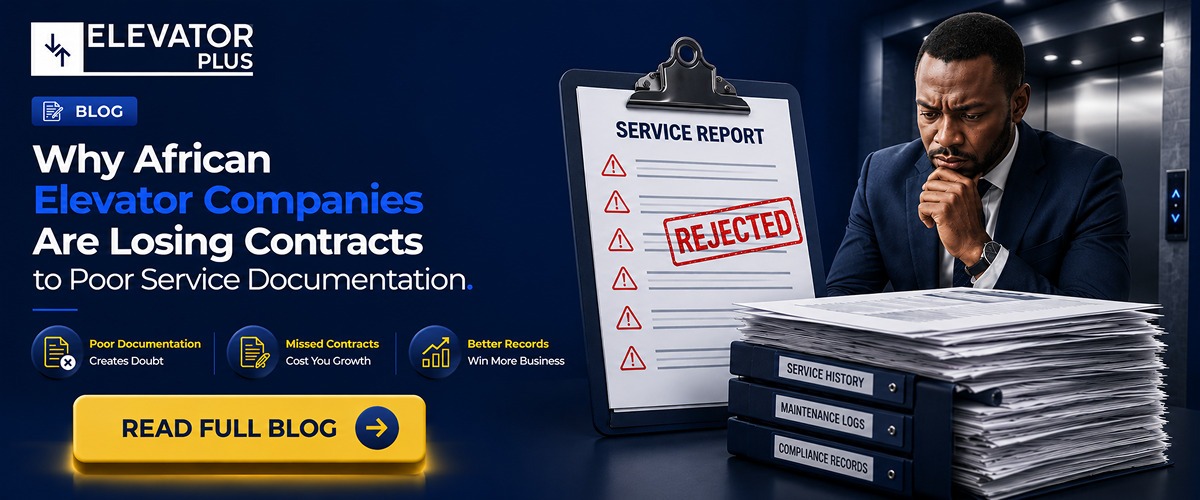
Across Sub-Saharan Africa, elevator companies are losing bids - not because their technicians aren't skilled, and not because their prices are too high. They're losing because they can't prove what they've done.
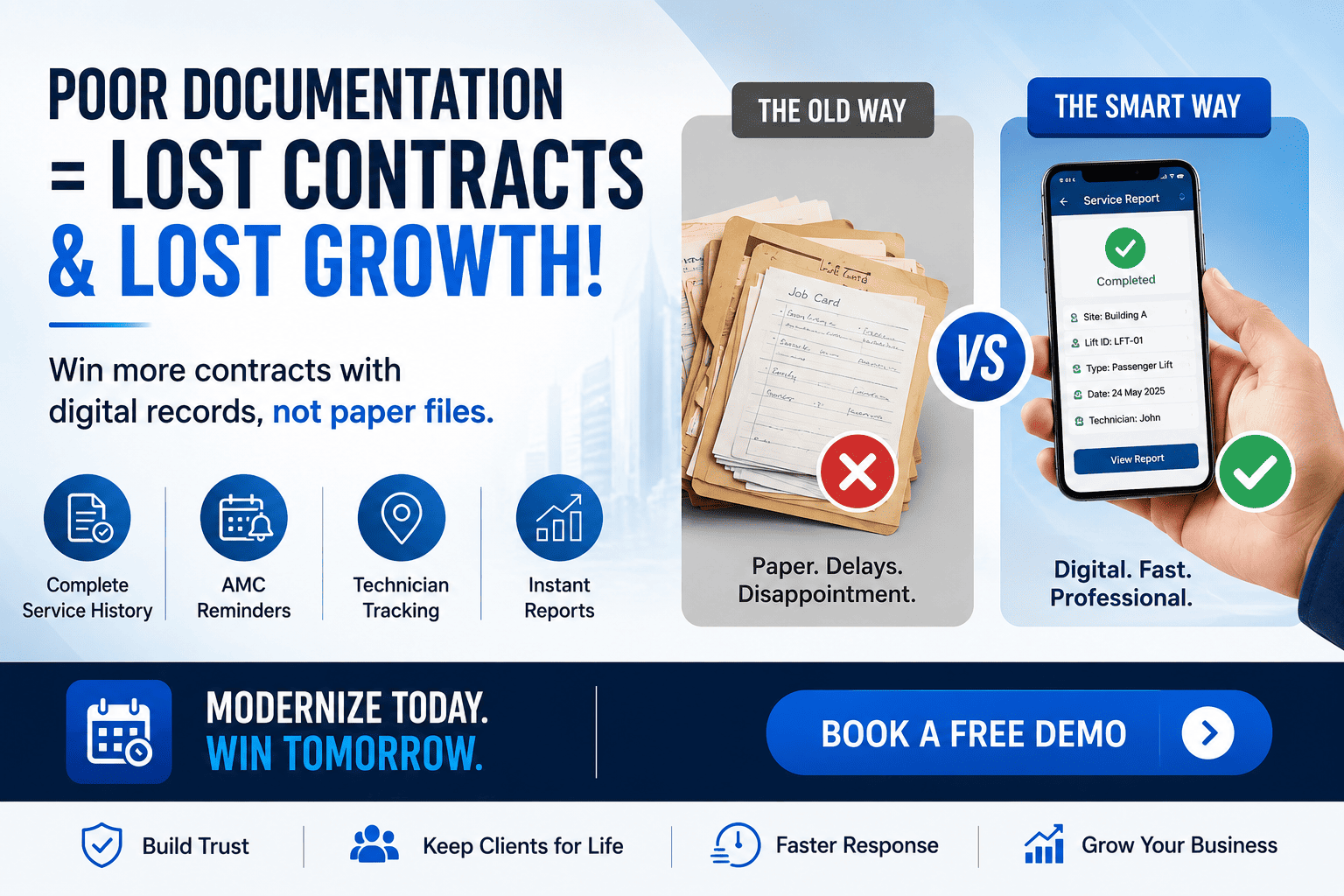
When a property management company in Nairobi, Lagos, or Johannesburg is choosing between two elevator service contractors, the one who can produce a clean, digital service history almost always wins the contract. The one still handing over a folder of handwritten job cards, or worse, a "we'll email it to you" response, gets passed over.
This isn't a technical problem. It's a documentation problem. And it's one of the most fixable issues in the African elevator industry today.
The Documentation Gap in African Elevator Companies
Why Service Records Matter More Than You Think
Service documentation is not just paperwork. In the context of a modern elevator maintenance contract, service records are:
Your proof of compliance - regulators and building owners increasingly require documented evidence that lifts have been maintained to code
Your liability protection - in the event of an incident, your service records are the difference between a defensible position and a catastrophic legal outcome
Your sales tool - when bidding for new contracts, a clean digital service history proves professionalism in a way that verbal assurances cannot
Your renewal leverage - clients who can see exactly what you've done over 12 months are far more likely to renew than those who have to take your word for it
The African elevator market is growing rapidly. Kenya, Nigeria, Ghana, and South Africa are all seeing significant high-rise construction activity, with urban populations demanding residential and commercial elevators at a pace that far outstrips the capacity of existing contractors. The opportunity is enormous - but only for companies that can demonstrate professional operational standards.
The Real Cost of Poor Documentation
Lost Contracts You Never Knew You Were Losing
Most elevator contractors don't know how many contracts they fail to win because of documentation gaps. The feedback rarely comes directly. A property manager will simply choose another provider without explaining why.
But here's what's happening in the background: when a building owner or facilities manager evaluates elevator service proposals, documentation capability is a primary differentiator — especially for larger commercial properties, hotel chains, and institutional buildings. These clients manage risk. They need records. And if you can't show them a professional documentation system during the sales conversation, they move on.
Regulatory Pressure Is Increasing
Across East Africa, West Africa, and Southern Africa, elevator safety regulations are tightening. Kenya's National Construction Authority has strengthened lift safety oversight. South Africa's Occupational Health and Safety Act places clear responsibilities on elevator owners and service providers to maintain documented inspection records. Nigeria's Standards Organisation and Lagos State government have increased scrutiny of commercial lifts.
An elevator company without digital records isn't just losing sales opportunities — it's accumulating regulatory and legal risk.
The Hidden Cost in Emergency Responses
When a lift breaks down at 11pm on a Friday, the technician who responds needs access to that lift's service history. What was the last PPM date? What parts were replaced three months ago? Is there a known recurring fault?
Without a digital service record accessible on a mobile phone, your technician is working blind. That means longer response times, higher chance of misdiagnosis, more call-backs, and frustrated clients. Over a year, this inefficiency adds up to significant revenue loss and client attrition.
What Good Documentation Actually Looks Like
The Minimum Standard for Competitive African Elevator Companies
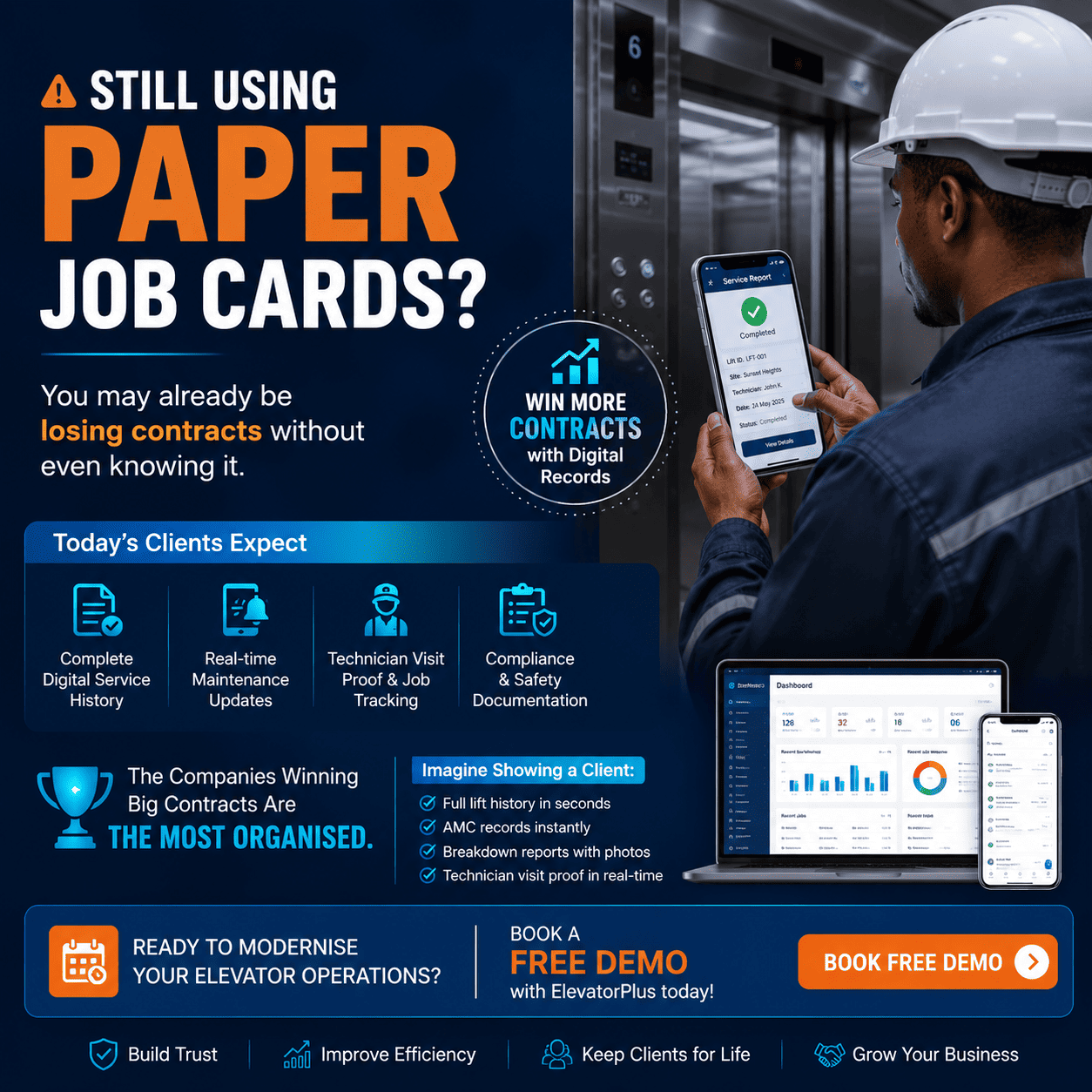
If you want to win contracts at commercial properties and institutional buildings in Africa's growing cities, your documentation system needs to deliver:
1. Digital job cards completed on-site
Technicians should complete their job records on a mobile device immediately after completing work — not hours later from memory, and not on paper that gets transcribed back at the office. Immediate digital entry means accurate records, GPS-verified site attendance, and real-time visibility for your office team.
2. A complete, searchable service history per lift
Every lift you maintain should have a full digital history: every PPM visit, every repair, every part replacement, every inspection. When a client asks for the last three years of service records, you should be able to produce them in under two minutes.
3. Client-accessible reports
The most professional elevator companies in Africa are now providing clients with regular service reports monthly or quarterly summaries of all work completed, upcoming maintenance schedules, and any identified risks. This level of transparency builds trust and dramatically reduces client churn.
4. Photo and video evidence
For fault diagnoses, repair work, and before/after documentation on modernisation jobs, photo evidence attached to the digital job card is increasingly expected by sophisticated clients. It removes disputes, demonstrates thoroughness, and accelerates invoice approval.
How African Elevator Contractors Are Making the Switch
The Transition Is Simpler Than Most Companies Expect
The biggest barrier to switching from paper to digital is usually inertia — "we've always done it this way" rather than any genuine technical difficulty. Modern elevator management platforms are designed to be used by field technicians on basic Android smartphones, require minimal training, and work in low-connectivity environments.
For elevator companies operating in areas with inconsistent mobile data rural Kenya, parts of West Africa, or load-shedding-affected areas in South Africa offline-capable mobile tools are essential. The best systems sync automatically when connectivity is restored, meaning your technicians never lose data and never have to wait for signal to complete their job records.
The typical transition timeline for a small to mid-size African elevator company:
Week 1: Platform setup, existing lift data uploaded
Week 2: Technician training (usually half a day per team)
Week 3: Parallel running (digital alongside paper as backup)
Week 4: Full digital transition
Most companies that have made this transition report that their technicians prefer it within two weeks. The friction is always at the management level, not the field level.
Building the Documentation Foundation for Growth
From Small Contractor to Professional Service Company
The elevator contractors who are growing fastest in Africa are not necessarily the ones with the most technicians or the lowest prices. They are the ones who look the most professional. And in 2026, professionalism in the elevator industry is inseparable from digital operational standards.
When you can walk into a bid meeting with a tablet, pull up your service history for a similar property, and show a sample of the client-facing reports you produce, you have already differentiated yourself from 80% of your competition.
That's not theory. That's the experience of elevator companies in Nairobi, Lagos, and Accra who have made this switch and are now winning contracts they previously couldn't access.
FAQ: Elevator Service Documentation in Africa
Q: What documentation do African elevator companies legally need to maintain?
Requirements vary by country, but across most of sub-Saharan Africa, elevator companies are expected to maintain records of regular inspections, PPM visits, fault repairs, and compliance certifications. In South Africa, this is governed by the OHS Act. In Kenya, the NCA oversees lift safety. Always check your specific country's requirements with your local regulatory body.
Q: What's the most common documentation mistake African elevator contractors make?
The most common mistake is completing job cards hours or days after the work was done, from memory. This produces inaccurate records, creates discrepancies, and fails to capture important details that are only visible in the moment. Digital, on-site completion solves this entirely.
Q: Will digital documentation tools work in areas with poor internet connectivity?
Yes - modern elevator management platforms are built with offline capability as a standard feature, not an add-on. Your technicians can complete job cards, take photos, and access lift history without a mobile data connection. Everything syncs when connectivity is restored.
Q: How do I convince experienced technicians to switch from paper to digital?
The most effective approach is to involve senior technicians in the selection and setup process. When technicians feel ownership over the tool rather than having it imposed on them, adoption is significantly faster. Most technicians find digital tools easier within two weeks.
Q: Can digital service records actually help me win more contracts?
Directly, yes. In every competitive bid process for commercial or institutional elevator contracts in Africa, the ability to demonstrate a professional documentation system is a significant differentiator. Property managers and facilities directors are increasingly selecting contractors on operational professionalism, not just price.
The African elevator industry is at an inflection point. Urban growth, rising building standards, and increasing regulatory scrutiny are all pushing in the same direction: professional, documented, accountable service operations.
The companies that will win the next decade of African elevator contracts are not going to be the ones who fix lifts the fastest. They're going to be the ones who can prove they fixed lifts professionally, consistently, and to code and show the records to prove it.
Poor documentation is not just an administrative inconvenience. It's a growth ceiling. And the good news is that it's entirely within your control to fix.
→ Fix your service records in 48 hours.
Start your ElevatorPlus free trial today and see how Africa's growing elevator companies are building the documentation foundation that wins contracts.