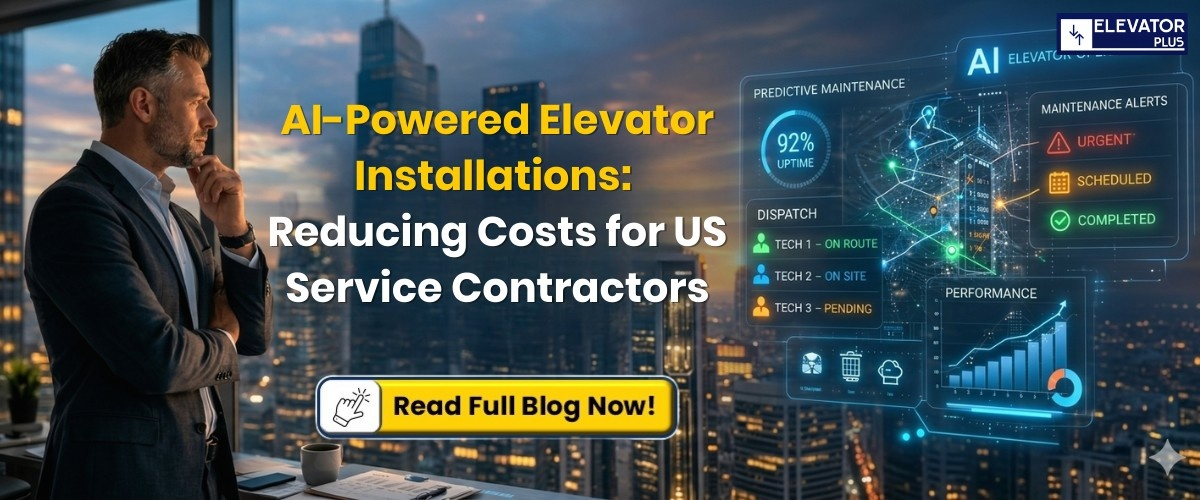
AI-Powered Elevator Installations: Reducing Costs for US Service Contractors
The elevator industry in the United States is changing rapidly. As cities like New York, Chicago, Miami, Houston, and Los Angeles continue to grow vertically, elevator contractors are under increasing pressure to install, maintain, and service elevators faster than ever before.
However, many elevator companies are struggling with rising operational costs and complex service requirements.
Across the US market, contractors frequently deal with:
- Elevator technician shortage in the US
- Increasing union labor and overtime costs
- Complex compliance processes such as AHJ inspection elevator USA
- Unexpected elevator maintenance audit USA requirements
- Frequent elevator service delays USA
- Slow elevator breakdown response time
At the same time, many service teams still rely on manual spreadsheets, disconnected tools, or outdated dispatch systems.
These outdated processes lead to inefficiencies that increase labor costs and reduce service quality.
This is where Artificial Intelligence (AI)-supported job scheduling and modern elevator service management software are starting to transform elevator operations.
🚀 Want to see how modern elevator companies reduce service delays and improve technician dispatch?
👉 Schedule a quick demo to explore smarter elevator operations
Modern platforms now allow contractors to manage installations, maintenance visits, and emergency breakdowns more efficiently through intelligent scheduling and operational visibility.
Why Elevator Contractors In the U.S. Are Facing Rising Operational Costs?
Elevator service companies operate in one of the most complex service environments.
Unlike other field service industries, elevator contractors must coordinate installation projects, preventive maintenance visits, emergency breakdown calls, compliance documentation, and parts inventory all at the same time.
Without proper systems, these operations quickly become inefficient.
💡 Looking for a better way to manage installations, service calls, and compliance in one place?
👉 Discover how smarter elevator management systems are helping contractors scale operations
Technician Shortages And Labor Constraints
The elevator technician shortage in the US continues to affect contractors nationwide.
Experienced technicians are retiring while certification requirements make it difficult to train new workers quickly.
As a result, companies often face:
- Delayed installations
- Slower response to breakdown calls
- Increased overtime labor costs
For elevator companies operating in large cities like New York and Los Angeles, the shortage of qualified technicians can significantly affect service performance.
📊 Curious how elevator companies handle more service calls with fewer technicians?
👉 See how intelligent job scheduling improves technician productivity
Inefficient Dispatching And Technician Routing
Many elevator service teams still assign technicians manually.
This often leads to inefficient routing, where technicians travel across large service regions unnecessarily.
Without intelligent dispatch support, companies experience:
- Longer technician travel time
- Reduced daily job completion rates
- Increased fuel and operational costs
When dispatch managers lack visibility into technician location and workload, coordinating installations and service calls becomes extremely difficult.
Compliance and Documentation Challenges
Elevator contractors must maintain detailed records to meet regulatory standards.
This includes:
- Elevator maintenance compliance USA
- Elevator preventive maintenance logs
- Documentation required for AHJ inspection elevator USA
- Records required for elevator maintenance audit USA
Without digital systems, maintaining these records manually can create administrative bottlenecks and increase the risk of compliance issues.
⚙️ Want to simplify compliance documentation and maintenance tracking?
👉 Explore how digital elevator maintenance systems help teams stay audit-ready
What Is AI Elevator Job Scheduling?
AI elevator job scheduling uses Artificial Intelligence and operational data to help service managers assign technicians more efficiently.
Instead of relying on manual planning, AI-assisted scheduling tools analyze information such as:
- Technician availability
- Technician certifications and skill levels
- Job urgency and priority
- Technician location and travel distance
- Service contract obligations
By analyzing these factors, the system can recommend the most efficient job assignments.
This helps reduce scheduling errors and improves operational efficiency.
For elevator contractors managing hundreds of elevators across large cities, AI technician dispatch tools can significantly improve coordination between installation teams and service technicians.
How AI Reduces Installation and Maintenance Costs?
Artificial Intelligence-supported systems help contractors reduce operational costs by improving workflow coordination and technician utilization.
📈 Want to reduce installation delays and improve technician utilization?
👉 See how AI-powered elevator job scheduling works
Optimised Installation Scheduling
Elevator installation projects involve multiple stages, including:
- Equipment delivery
- Mechanical installation
- Electrical integration
- Safety inspections and compliance checks
Poor coordination between these stages often leads to delays.
AI-assisted scheduling allows contractors to organize installation tasks more efficiently, ensuring technicians and equipment are available when needed.
This reduces project delays and helps contractors complete installations faster.
Smarter Preventive Maintenance Planning
Preventive maintenance is essential for reliable elevator performance.
Using elevator preventive maintenance logs, modern systems can track maintenance history and recommend future service schedules.
This supports better elevator AMC tracking and improves service planning for long-term maintenance contracts.
Preventive maintenance planning also helps companies reduce unexpected failures and improve elevator service contract renewal rates.
Reducing Labor Waste And Overtime
Labor costs represent one of the largest expenses for elevator contractors.
AI-supported job scheduling helps balance technician workloads and reduce unnecessary overtime.
By assigning technicians based on proximity and availability, companies can reduce travel time and complete more service jobs within normal working hours.
📊 See how better technician scheduling reduces overtime and improves daily productivity
👉 Explore how smarter service management works
Faster Emergency Response For Elevator Breakdowns
Elevator failures require immediate action.
When an elevator stops working in a residential tower or commercial building, tenants and building managers expect rapid service response.
AI-supported dispatch systems help improve elevator breakdown response time by identifying the closest available technician and assigning the job immediately.
These systems also help prevent elevator service delays USA by optimizing technician workloads and prioritizing urgent service calls.
Faster emergency response leads to:
- Reduced elevator downtime
- Improved tenant satisfaction
- Stronger relationships with property managers
⚡ Want to improve emergency elevator response without hiring more technicians?
👉 See how modern elevator operations platforms help service teams respond faster
How Platforms Like ElevatorPlus Support Modern Elevator Operations
As elevator companies modernize their operations, many are adopting platforms designed specifically for vertical transportation companies.
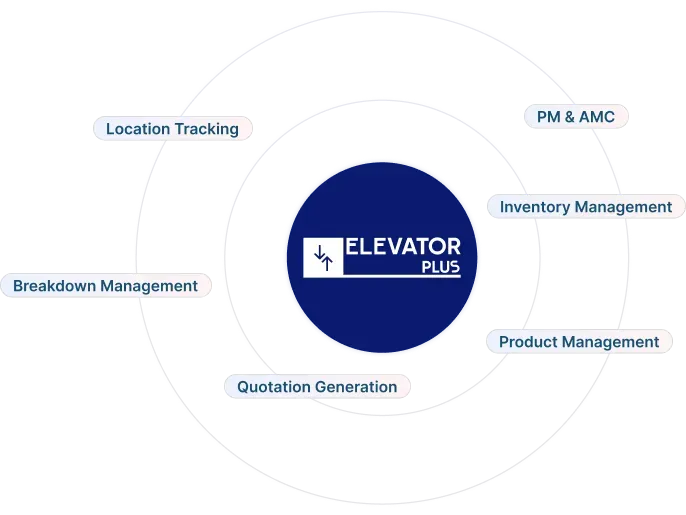
ElevatorPlus is a platform designed to support elevator contractors with tools that help manage installation projects, service operations, compliance documentation, and inventory management.
Instead of relying on disconnected systems, ElevatorPlus combines multiple operational functions into one environment.
🚀 Interested in seeing how an all-in-one elevator management platform works?
👉 Schedule a demo to explore ElevatorPlus
AI Job Scheduling Support
The platform supports AI elevator job scheduling to assist dispatch teams in assigning technicians based on job priority and technician availability.
This helps service managers coordinate installation projects, preventive maintenance visits, and breakdown responses more efficiently.
Maintenance And AMC Management
ElevatorPlus includes capabilities designed to support:
- Elevator AMC software
- Elevator preventive maintenance logs
- Maintenance scheduling for long-term service contracts
These features help contractors manage elevator maintenance software USA requirements while improving service reliability.
Compliance And Inspection Documentation
ElevatorPlus also helps companies manage compliance through tools such as:
- Elevator compliance software USA
- Documentation for AHJ inspection elevator USA
- Records required for elevator maintenance audit USA
By digitizing these records, contractors can simplify inspections and reduce administrative effort.
Inventory And Parts Tracking
The platform includes an integrated elevator inventory management system and elevator parts tracking system.
This allows contractors to track spare parts usage, prevent elevator repair stockouts, and ensure technicians have the necessary parts available when responding to service calls.
Service Reporting And Communication
ElevatorPlus also includes elevator service reporting software and elevator service communication software, helping teams track job completion, maintenance history, and technician activity.
This improves communication between technicians, dispatch teams, and management.
Real operational Scenario
Consider a mid-sized elevator contractor operating across Chicago and Houston, managing hundreds of elevators across residential and commercial buildings.
Before implementing a modern elevator field service management software, the company relied heavily on manual scheduling.
This resulted in:
- Frequent elevator service delays USA
- Inefficient technician routing
- Difficulty tracking compliance documentation
- Slow emergency breakdown response
After implementing a platform that supports AI elevator job scheduling, the contractor improved technician dispatch efficiency and reduced unnecessary travel time.
Maintenance scheduling became more predictable, and service teams could respond to breakdown calls faster.
As a result, the company reduced operational costs while improving service reliability.
The Future Of AI In The U.S. Elevator Industry
Artificial Intelligence is gradually becoming a core component of modern building operations.
As elevators become more connected through digital monitoring systems and smart building technologies, AI will play an increasingly important role in managing elevator service operations.
Future developments may include:
- Predictive maintenance insights
- Automated technician scheduling
- Smart parts inventory forecasting
- Real-time performance monitoring
For elevator contractors across the United States, adopting modern elevator service management software and AI-supported scheduling systems will become essential to remain competitive.
Conclusion
The US elevator industry continues to face increasing operational challenges from technician shortages to rising labor costs and strict compliance requirements.
By adopting AI elevator job scheduling and modern elevator service management software, contractors can improve technician dispatch efficiency, reduce installation delays, and optimize maintenance scheduling.
Platforms such as ElevatorPlus help elevator companies manage installations, maintenance compliance, inventory tracking, and service coordination more efficiently.
📌 Ready to modernize your elevator operations and reduce service delays?👉 Book a demo and see how ElevatorPlus helps elevator contractors scale smarter